Comparison
Moka Pot vs French Press: Which Should You Buy?
Two cheap classics that make almost opposite coffee: one is strong stovetop concentrate, the other a rich, full-immersion mug. Here's what actually changes in the cup, and which one belongs in your kitchen.
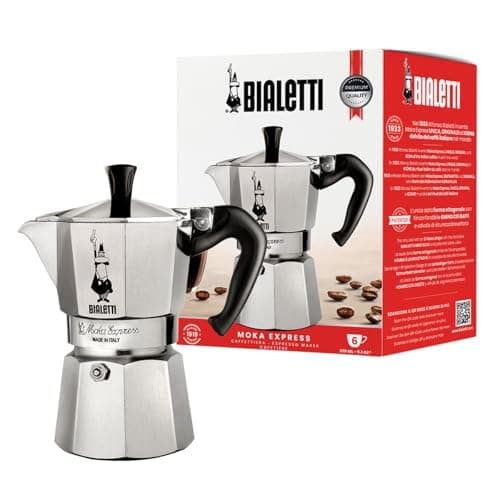
A moka pot and a French press are two of the cheapest classics in coffee — you can buy either for about the price of a few bags of beans — and they make almost opposite drinks. One brews strong, concentrated, espresso-adjacent coffee under a little steam pressure on your stove; the other steeps grounds in hot water and pushes them down through a metal filter for a rich, heavy-bodied cup. Neither needs electricity or pods. Choosing between them is really about which coffee you want in the mug, and how much attention you feel like giving it.
The short answer
Buy a moka potif you want strong, intense, concentrated coffee — the kind that shines cut with hot water as an Americano or poured into steamed milk — in small servings, and you don't mind standing at the stove for a few minutes. Buy a French pressif you want a rich, full-bodied mug of regular-strength coffee, in bigger batches, with almost no technique and no heat source beyond a kettle. They aren't really rivals so much as two different drinks: the moka pot leans espresso-adjacent and small, the French press leans big, round and easygoing.
How each one brews
A moka pot brews with pressure — just not much of it. Water sits in the sealed bottom chamber; as it heats on the stove, steam pressure of roughly 1–2 barpushes the water up through a basket of fine-medium grounds and into the top chamber, where it collects as a strong, dark coffee. It's fast and hands-on: you keep the heat low and pull it off the moment it starts to gurgle and sputter, or the last of the water scorches and turns the coffee bitter. That 1–2 bar is a fraction of the roughly 9 bar a real espresso machine uses, so a moka pot makes espresso-adjacentcoffee, not true espresso with crema — the full story is in moka pot vs espresso machine.
A French press brews by full immersion— no pressure at all. You add coarse grounds and hot water to the carafe, give it a stir, and let everything steep together for about four minutes, then press the mesh plunger down to separate the grounds from the liquid. Because the filter is metal, not paper, the coffee's oils and some fine particles pass straight into the cup, which is exactly what gives French press its heavy, rounded body — and a little sediment at the bottom. There's no stove step at all: as long as you can boil water, you can make it anywhere.
Strength and body
This is the heart of the difference. A moka pot makes concentratedcoffee — a small volume of strong, intense liquid you can sip straight Italian-style, stretch with hot water, or pour into milk. It tastes bold and slightly heavy, close to a long espresso. A French press makes regular-strengthcoffee by the mug, but with far more body than drip or pour over: the metal filter leaves the oils in, so it drinks rich, thick and full. Put simply, the moka pot wins on intensity and the French press wins on body and volume — strong-and-small versus rich-and-big.
Grind size
They want opposite grinds, and this is where beginners most often go wrong. A moka pot needs a fine-mediumgrind — finer than drip, a touch coarser than espresso, roughly the texture of table salt. A French press needs a coarsegrind, like coarse sea salt; anything finer slips through the mesh and turns the cup muddy and bitter. If you own one burr grinder you'll simply dial it to two different settings for the two brewers — our grind size chart shows both. What you cannot do is use the same grind in both and expect good coffee from each.
Batch size and servings
A moka pot is sized in small espresso-style "cups" of roughly 1–2 oz each — the classic 6-cup Bialetti yields about 9 oz total, one large mug or two small ones — and it brews best filled to its rated size, so a half pot never comes out quite right. A French press scales up easily: a standard 34 oz press makes around two to three mugs at once, and larger sizes go further. If you're brewing one or two strong cups, the moka pot fits; if you're serving a table or want a big, unhurried morning pot, the French press is the natural choice.
Effort and attention
The French press is the more relaxed brew. You boil water, steep for four minutes, plunge, and pour — there's a timer's worth of waiting but nothing to watch. A moka pot asks for a little more presence: keep the heat low, and catch it at the right moment to take it off the stove before it sputters, or the brew scorches. Neither is difficult, but the French press is genuinely walk-away simple, while the moka pot rewards a couple of minutes of attention. Our how to use a moka pot guide covers the timing.
Cleanup
A moka pot comes apart into three main pieces — base, funnel basket and top — plus a gasket and filter plate; you knock out the coffee puck, rinse, and (for aluminum) hand-wash without soap to protect the seasoning. It's quick, but it is a few parts. A French press is fewer pieces but a messier rinse: wet spent grounds cling to the bottom and shouldn't go down the drain, so most people scoop or rinse them into the trash or compost, then wash the carafe and occasionally unscrew the filter disc to clear trapped fines. Call it a draw — two different kinds of small chore.
Cost
Both are about as cheap as coffee gear gets, which is a big part of their appeal. A classic aluminum moka pot and a glass French press each cost roughly the price of a few bags of beans, need no electricity, and have no electronics to fail. The main running costs are consumables: a moka pot's gasket and filter plate wear out and cost pennies to replace, and a glass French press's carafe can crack (though on the good ones it's a replaceable part, not a whole new press). Whichever way you lean, price isn't the deciding factor here — the coffee is.
At a glance
| Attribute | Moka pot | French press |
|---|---|---|
| Brew method | Steam pressure (~1-2 bar) | Full immersion (no pressure) |
| Coffee style | Strong, concentrated, espresso-adjacent | Rich, full-bodied, regular strength |
| Body | Heavy and intense | Heavy, rounded, some sediment |
| Grind | Fine-medium (table salt) | Coarse (coarse sea salt) |
| Filter | Metal funnel + filter plate | Metal mesh plunger |
| Batch size | Small (6-cup ~9 oz) | Large (34 oz ~2-3 mugs) |
| Heat source | Stove required | Kettle only |
| Effort | Watch the stove, pull at the gurgle | Steep 4 min, plunge, pour |
| Milk drinks | Great concentrated base | Not ideal (no concentrate) |
| Electricity | None | None |
A pot and a press to start with
If you land on the moka pot side, the classic Bialetti Moka Express is the default: an octagonal aluminum pot first made in 1933, cheap, and repairable more or less forever. The 6-cup size is the sweet spot for one or two drinkers. See the full field in our best moka pot guide.
| Bialetti Moka Express | ~1-2 bar, aluminum, 6-cup (~9 oz), stovetop, fine-medium grind |
|---|---|
| Bodum Chambord | Full immersion, borosilicate glass, 34 oz, 3-part mesh, coarse grind |
If the French press is your pick, the Bodum Chambord is the archetype: a borosilicate glass carafe in a polished steel frame with a three-part stainless mesh filter, and every part is replaceable. The 34 oz size suits a couple or a small household. More options are in our best French press guide.
Who each is for
Get a moka pot if:you want strong, concentrated coffee — black, as an Americano, or as the base for a latte or cappuccino with a separate frother — in small servings, you enjoy a quick hands-on ritual, and you want a compact brewer that travels and camps well. Of the two, it's also the closer taste to espresso.
Get a French press if:you want a rich, full-bodied mug of everyday-strength coffee, you often brew for more than one person or want a big pot, you value a dead-simple, walk-away method, and you don't mind a little sediment (or you grind coarse enough to avoid most of it). It's the more forgiving, higher-volume everyday brewer.
The verdict
There's no overall winner, because they make different coffee. If you drink it strong and small — or you want an espresso-adjacent base for milk drinks — the moka pot is the smarter buy. If you want a rich, full-bodied mug by the potful with the least possible fuss, the French press wins. Honestly, plenty of coffee lovers own both: the moka pot for an intense weekday shot, the French press for a big, relaxed weekend pot. Whichever you pick, a burr grinder set to the right texture does more for the cup than the brewer itself. Still deciding between specific models? Our best moka pot and best French press guides go deeper.
Frequently asked questions
Which makes stronger coffee, a moka pot or a French press?
A moka pot. It brews a small volume of concentrated, espresso-adjacent coffee that's intense enough to sip straight, cut with hot water for an Americano, or pour into milk. A French press makes regular-strength coffee by the mug, but with a much heavier, fuller body than drip because its metal filter leaves the oils in. So the moka pot wins on intensity, the French press on body and volume.
Can I use the same grind for a moka pot and a French press?
No — they need opposite grinds. A moka pot wants a fine-medium grind, roughly the texture of table salt, finer than drip but a bit coarser than espresso. A French press wants a coarse grind, like coarse sea salt; anything finer slips through the mesh and turns the cup muddy and bitter. If you own one burr grinder, just dial it to two different settings for the two brewers.
Does a moka pot or French press make espresso?
Neither makes true espresso. Real espresso is pulled at around 9 bar of pressure; a moka pot only reaches about 1 to 2 bar, and a French press uses no pressure at all. The moka pot comes closest in taste — its coffee is strong and concentrated, or espresso-adjacent — but it can't build real crema. For that you need an actual espresso machine.
Which is easier for a beginner?
The French press is the more forgiving of the two: boil water, steep about four minutes, plunge, and pour, with nothing to watch on the stove. A moka pot is still simple but asks for a little attention — low heat, and you take it off the moment it starts to gurgle so it doesn't scorch. Both are easy to learn; the French press is the true walk-away brew.
Why is my French press coffee muddy or gritty?
Almost always the grind. A French press needs a coarse, even grind; if it's too fine, the small particles slip past the metal mesh into the cup and over-extract into bitterness. A burr grinder set coarse fixes most of it. Some sediment is normal for any metal-filter press — it's part of the full-bodied character — but a good coarse grind keeps it to a minimum.
Sources
Keep reading
Buying your first setup?
See how we pick — compiled specs, cost-per-shot math, and honest trade-offs — then dig into the guides. No fake test lab, no rankings for hire.