Buying Guide
The Best Super-Automatic Espresso Machines Under $1,000 in 2026
Bean-to-cup under a thousand dollars is a real category now, not a compromise. Three machines that sit under the line on live prices, compared on the three things that decide whether you still like them in year three: burrs, milk system and cleaning.
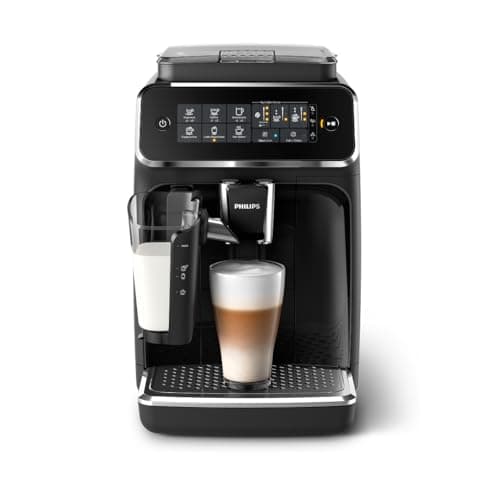
The verdict first. Under a thousand dollars the super-automatic to buy is the Philips 3200 Series LatteGo— ceramic burrs, a genuinely removable brew group, and a two-part milk system with no tubes that rinses in about fifteen seconds, which is the difference between a machine you use daily and a machine you resent. It is also the cheapest machine in the band on the current capture, so it doubles as the budget pick. If several people in the house want different drinks, the De'Longhi Magnifica Evo has the broader menu; the Gaggia Magenta Prestige has the most on-screen options of the three.
A super-automatic grinds, doses, tamps, brews and (usually) froths at the touch of a button. That convenience is the entire product, and it is why the category divides on maintenance rather than on cup quality. All three machines here make a decent shot. The one you will still be using in three years is the one whose milk system you do not dread cleaning.
Every price on this page comes from the live price layer and the as-of date sits under the table. A machine earns a ranked slot only if it sits under $1,000 on the current capture; two that do not are named below the line rather than quietly included.
What $1,000 buys in bean-to-cup
It buys ceramic or steel burrs and a real brew group.At this level you get a proper adjustable burr grinder rather than a token one, and on the better machines a brew group you can pull out and rinse under a tap — which is the single most useful serviceability feature a super-auto can have.
It buys an automatic milk system, but they are not equal. The designs split into tube-and-carafe systems and tube-free two-part systems. Tubes are where milk sits and sours if the rinse cycle is skipped. A system you can take apart and put in the dishwasher is worth real money here.
It does not buy manual control. You are not adjusting dose, pressure or pre-infusion in any meaningful way. If that is what you want, a semi-automatic plus a grinder is the better use of the same money — a trade worth working through before you buy, because it is the decision most people get wrong.
How we picked
Each machine has a live retail listing we can price and is assessed against the manufacturer's published specifications — burr material and adjustment, milk system design, descaling and cleaning requirements, tank and bean capacity, and drink count. Our full approach is on the methodology page. We weighted cleaning burden first, grinder and brew-group quality second, and drink menu third, because menu breadth is the spec people over-weight at purchase and under-use afterwards.
At a glance
The three under the line. Tap any button for the live Amazon price; the number shown at checkout is the one that applies.
| Machine | Burrs | Milk system | Brew group | Best for | Price |
|---|---|---|---|---|---|
| Philips 3200 LatteGo | 100% ceramic, 12 steps | Two-part, tube-free | Fully removable | Best overall | $529.00Buy |
| De'Longhi Magnifica Evo | Steel conical | Automatic frother | Removable | Drink variety | $785.99Buy |
| Gaggia Magenta Prestige | Ceramic | Carafe milk system | Removable | Widest menu | $859.55Buy |
Prices shown are from Amazon as of November 7, 2026 and change often — the button always goes to the current listing. Some links may earn us a commission at no extra cost to you.
Best overall under $1,000: Philips 3200 Series LatteGo
Who it is for: the household that wants one-touch milk drinks with the least cleaning, and the lowest price in the band.
The 3200's case rests on three published facts. Its burrs are 100% ceramic, adjustable in 12 steps and rated for at least 20,000 cups. Its LatteGo milk system is two parts with no tubes, which Philips states rinses in about 15 seconds and which goes in the dishwasher — the single best answer in this band to the problem that kills super-autos. And the brew group is fully removable, so the part that actually gets dirty can be taken out and washed. It also runs an AquaClean filter programme that defers descaling for up to 5,000 cups when the filter is changed as prompted. Our full Philips 3200 review goes through the specification and the buying traps in detail.
Honest cons: the drink menu is the narrowest of the three, there is no app or profile system, and the EP3241 and EP3246 are both sold as "3200 Series" with regional suffixes that differ in finish and sometimes in drink count — check the model number against the milk system rather than trusting the series name.
Best for drink variety: De'Longhi Magnifica Evo
Who it is for: the household where two or three people want different drinks and nobody wants to learn a machine.
The Magnifica Evo is De'Longhi's mainstream bean-to-cup: a conical steel grinder, a removable brew unit and an automatic milk frotherwith a wider set of one-touch drinks than the Philips offers. De'Longhi's service and parts network in the US is the strongest of the three brands here, which matters on a machine with this many moving parts. It is reviewed in full in our Magnifica Evo review.
Honest cons: it is the most expensive machine under the line on the current capture, so the variety costs you real money against the Philips; and its milk system uses a carafe with a tube path, which is more to rinse than LatteGo's two parts. Steel burrs are not a downgrade from ceramic in cup terms, but they are the cheaper material.
Best for a wider on-screen menu: Gaggia Magenta Prestige
Who it is for: the drinker who wants the longest drink list and a carafe milk system, and does not mind cleaning it.
The Magenta Prestige is Gaggia's full-feature super-auto: ceramic burrs, a removable brew group, a colour display and more programmed drinks than either machine above. If your household makes cappuccinos, lattes, flat whites and long blacks on rotation, the menu does real work. It is also the machine on this page with the most adjustment exposed to the user.
Honest cons: the carafe milk system is the most cleaning of the three, it is the largest machine here, and Gaggia's US service network is thinner than De'Longhi's. On the current capture it is the most expensive of the three. If the extra drinks are not drinks you will actually make, the Philips is the better buy.
Just above the band
Two machines sit above $1,000 on the current capture and are worth knowing about before you commit. The De'Longhi Rivelia adds bean-switching with two hoppers and per-user profiles, which is the real answer for a household split between decaf and regular. The Jura E8 is a different class of build and milk system entirely, and it is where super-autos start being bought as ten-year appliances.
| Machine | What it adds | Price |
|---|---|---|
| De'Longhi Rivelia | Two bean hoppers, per-user profiles | $1,299.95Buy |
| Jura E8 | Premium build, stronger milk system | $2,184.97Buy |
Prices shown are from Amazon as of November 7, 2026 and change often — the button always goes to the current listing. Some links may earn us a commission at no extra cost to you.
If neither of those features is the thing you are missing, the money is better spent on better beans than on a bigger machine. And if you are still weighing bean-to-cup against a machine and grinder, read best super-automatic espresso machines and best espresso machines under $1,000— the second ranks semi-automatics in the same budget and reaches a very different answer.
The bottom line
Philips 3200 LatteGo is the pick for most people under $1,000: cheapest in the band, ceramic burrs, and the milk system you are least likely to neglect. Choose the Magnifica Evo if drink variety and service network matter more than cleaning time, and the Magenta Prestige if you want the longest menu on screen. And if you would rather control the shot than press a button, spend the same money on a semi-automatic and a grinder instead.
Frequently asked questions
What is the best super-automatic espresso machine under $1000?
The Philips 3200 Series LatteGo. It has 100% ceramic burrs adjustable in 12 steps, a fully removable brew group, and a two-part tube-free milk system that Philips states rinses in about 15 seconds and can go in the dishwasher - which is the feature that decides whether you still use a super-automatic three years in. It is also the cheapest machine in the band on the current price capture, so it is the budget pick as well.
How many super-automatic machines actually cost under $1,000?
On the current price capture, three of the bean-to-cup machines we track sit under the line: the Philips 3200 LatteGo, the De'Longhi Magnifica Evo and the Gaggia Magenta Prestige. The De'Longhi Rivelia and the Jura E8 are above it. Prices move, so the buttons on this page always carry the current figure and the as-of date is shown with each table.
Is a super-automatic under $1,000 better than a semi-automatic and a grinder?
It depends entirely on what you want from the machine. A super-automatic buys you one-touch convenience and gives up control of dose, grind adjustment and milk texturing. For the same money a semi-automatic plus a good grinder will make a better shot and better microfoam, but it asks for a routine. Households that want a button should buy bean-to-cup; people who enjoy the process should not.
What maintenance does a super-automatic espresso machine need?
Daily or per-use rinsing of the milk system, regular emptying of the puck and drip containers, periodic removal and washing of the brew group, and descaling on a schedule set by your water hardness. The milk system is the part that matters most - milk left in tubes sours quickly. A tube-free, dishwasher-safe milk system like the Philips LatteGo is the single biggest reduction in that burden available in this band.
Do super-automatics use ceramic or steel burrs, and does it matter?
Both are used. Ceramic burrs do not conduct heat into the grounds the way steel does and they wear slowly - Philips rates its ceramic burrs for at least 20,000 cups. Steel burrs are cheaper to make and sharpen more aggressively. In practice either will out-grind the rest of a super-automatic's workflow, so burr material should not be the deciding factor between these machines; the milk system should.
Sources
- Philips - 3200 Series LatteGo (EP3241) specifications: 100% ceramic burrs in 12 steps rated 20,000 cups, two-part tube-free LatteGo, removable brew group, AquaClean
- De'Longhi - Magnifica Evo (ECAM29084SB) specifications: conical steel burrs, automatic milk frother, removable brew unit
- Gaggia - Magenta Prestige specifications: ceramic burrs, carafe milk system, removable brew group
- De'Longhi - Rivelia specifications (two bean hoppers, user profiles)
- Jura - E8 specifications
Keep reading
Buying your first setup?
See how we pick — compiled specs, cost-per-shot math, and honest trade-offs — then dig into the guides. No fake test lab, no rankings for hire.