Buying Guide
The Best Espresso Cups in 2026
A double shot is about two ounces of liquid at temperature, poured into something that immediately starts stealing its heat. The cup is a bigger variable than most people realize.
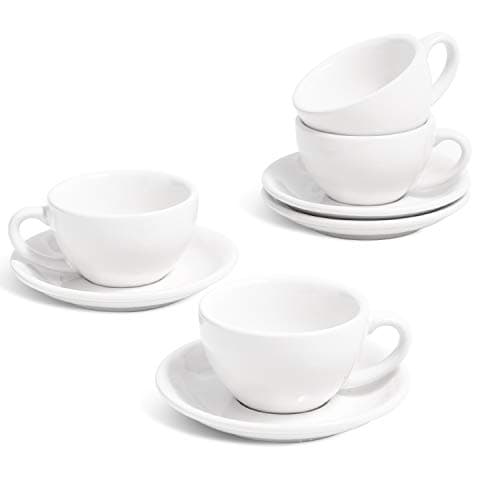
Espresso cups look like the least consequential purchase in coffee, somewhere between a coaster and a tea towel. They are not. A double shot is roughly two ounces of liquidthat left the group head at around 200 °F, and the moment it lands, the cup starts taking that heat away.
With that little volume, the cup wins. Pour a double into a cold, thin, oversized mug and you have measurably changed the drink before you have picked it up — which is why a shot that tasted great at the cafe can taste flat and sour at home even when everything about your machine and grind is right. This guide covers what actually matters (size, wall thickness, material), then five picks.
Why the cup matters more than it should
Two properties do all the work here, and neither of them is the pattern on the outside.
Thermal mass. A thick-walled ceramic cup holds heat, so once it is warm it keeps your shot warm. A thin cup has almost no mass, heats instantly and loses it just as fast. Counterintuitively, thick is better for both reasons: it takes more heat from the shot initially, which is why you preheat it, and then gives that heat back rather than bleeding it to the room.
Volume-to-surface ratio.A small cup with a narrow opening exposes less of the coffee's surface to the air, which slows cooling and keeps the aromatics where you can smell them. A wide, shallow cup does the opposite. This is the real reason a demitasse is shaped the way it is — it is not tradition for its own sake.
Neither of these makes a bad shot good. But a good shot in the wrong cup arrives cooler, goes flat faster, and loses the aroma that carries most of what you taste. It is one of the cheapest improvements available once the rest of your setup is dialed in — if the shot itself is the problem, start with how to pull an espresso shot instead.
What size do you actually need?
Cup size is decided by the drink, and it is the one place people go wrong before they even consider material. A demitasse— literally "half cup" — is the espresso standard, and 3 oz is the sweet spot: big enough for a double with crema and room to swirl, small enough that the coffee is not sitting in a cold void.
| Drink | Cup size | Why |
|---|---|---|
| Single espresso | 2-3 oz demitasse | ~1 oz of liquid; anything larger and it strands in the base |
| Double espresso | 3 oz demitasse | ~2 oz plus crema, with room to swirl |
| Macchiato / cortado | 3-4 oz | Espresso plus a small amount of milk |
| Cappuccino | 5-6 oz | Espresso plus milk and a thick foam layer |
| Flat white | 5-6 oz | Espresso plus textured microfoam, no foam cap |
| Latte | 8-12 oz | Espresso plus a lot of steamed milk |
Every pick on this page is 3 oz, because that is the size that covers straight espresso properly and is the one most people are missing. If you mainly drink milk drinks you need larger vessels too — and the milk side of the equation is covered in how to steam milk and our best milk frothing pitcher guide.
Ceramic, porcelain or double-walled glass?
All three work. They trade differently.
- Ceramic / porcelain— the default, and what cafes use. Good thermal mass, holds a preheat well, feels right in the hand, cheap to replace. Porcelain is generally denser and finer than stoneware ceramic; in practice both behave similarly at this size.
- Double-walled glass— two layers of glass with an air gap. The air gap is a genuinely effective insulator, so the coffee stays hot while the outside stays cool enough to hold. You also get to see the crema layer, which is the actual reason most people buy them. The trade-offs: more fragile, and because the inner wall has very little mass, they benefit less from preheating than thick ceramic does.
- Single-walled glass— looks lovely, insulates worst of all, gets too hot to hold. We would not recommend it for espresso specifically.
At a glance
| Cups | Size | Material | Includes | Price |
|---|---|---|---|---|
| LE TAUCI with Saucers | 3 oz, set of 4 | Ceramic | Cups + saucers | $26.99Buy |
| LE TAUCI Espresso Cups | 3 oz | Ceramic | Cups only | $14.99Buy |
| Gencywe Double Walled | 3 oz, set of 4 | Double-walled glass | Cups only | $13.99Buy |
| Lareina Espresso Set | 3 oz, set of 4 | Ceramic | Cups, saucers, spoons, stand | $26.98Buy |
| homEdge Mini Porcelain | 3 oz / 90 ml | Porcelain | Cups only | View at Amazon |
Prices shown are from Amazon as of October 17, 2026 and change often — the button always goes to the current listing. Some links may earn us a commission at no extra cost to you.
Best overall: LE TAUCI 3 oz Espresso Cups with Saucers
This is the set we would buy. It is a straightforward 3 oz ceramic demitasse with a matching saucer, in a set of four — the classic cafe proportions, in the material that handles heat best, at a price that does not make you precious about them.
The saucer is more useful than it looks. It catches drips from the portafilter spouts, gives you somewhere to rest a spoon, and adds a little more thermal buffer under the cup. Four is also the right quantity: enough to serve guests, cheap enough that a breakage is not a problem.
What we like: correct size, thick ceramic walls that hold a preheat, saucers included, and dishwasher-friendly practicality. The honest downsides: they are plain, so if you want a statement piece on the counter this is not it, and ceramic will chip if you stack it carelessly.
Best value: LE TAUCI 3 oz Espresso Cups
Same idea, same 3 oz ceramic demitasse format, without the saucers — and noticeably cheaper for it. If you drink your espresso standing at the machine and a saucer is just another thing to wash, this is the sensible buy.
What we like: the cheapest way here to get genuinely correct espresso cups, and the ceramic does the important job. The honest downsides: no saucer means no drip catcher and no spoon rest, and the presentation is bare if you are serving someone.
Best double-walled: Gencywe Double Walled Espresso Cups
The double-walled glass option, in a set of four at 3 oz. Two layers of glass with an air gap between them insulate the shot while keeping the outside cool enough to pick up immediately, and the clear construction means you can see the crema layer sitting on top of the shot— which is genuinely useful when you are dialing in, and pleasant the rest of the time.
These are marketed as 50% thicker than typical double-walled glass, which addresses the usual complaint about the category. They still demand more care than ceramic.
What we like: effective insulation, cool to the touch, and the visual feedback on crema and shot volume. The honest downsides: more fragile than ceramic, hand-washing is safer, and the thin inner wall means preheating helps them less than it helps a thick ceramic cup.
Best complete set: Lareina 3-Ounce Espresso Cups Set
The set to buy if the espresso corner is part of the kitchen's look. Four stackable 3 oz cups with saucers, matching spoons and a metal stand that holds the whole thing together vertically — which, in a small kitchen, is a real practical benefit as much as a decorative one.
What we like: everything included, stackable to save space, and the stand keeps a set of four from colonizing a cupboard shelf. The honest downsides: it is the most expensive pick here for the same 3 oz of coffee, and a display stand on the counter is exactly the kind of thing that is charming or clutter depending on your kitchen.
Best simple porcelain: homEdge Mini Porcelain Espresso Cup
The unfussy option. Plain 3 oz / 90 ml porcelainwith no styling to go out of date — the cup equivalent of a white plate. Porcelain is dense and holds heat well, and these are shaped like a proper demitasse rather than a shrunken mug.
What we like: correct size and material, visually neutral, easy to add to over time. The honest downsides: no saucers, and "plain" genuinely means plain — there is nothing here to enjoy beyond it doing its job.
Preheating: the free upgrade
Whichever cup you buy, this is the habit that matters more than the purchase. Preheat it. A room-temperature ceramic cup will pull a meaningful amount of heat straight out of two ounces of espresso, and you can feel the difference in the first sip.
Three ways, in order of convenience:
- Use the machine's cup warmer if it has one on top. Leave cups there permanently and the problem solves itself.
- Run hot water into the cupfrom the machine's hot water outlet or the kettle while you dose and tamp, then tip it out just before you pull.
- Pull a blank shot into itif you are flushing the group head anyway — you were going to run that water somewhere.
It takes no extra time if you fold it into the routine you already have while the machine warms up. Combined with the right size cup, it is the difference between a shot that tastes the way it did at the cafe and one that mysteriously does not. If you are still building out the rest of the setup, our best espresso tamper and best coffee scale guides cover the other low-cost pieces that change results. Cups are also one of the few coffee purchases that make a genuinely good present, which is why they appear in our gifts for coffee lovers guide alongside the other things people rarely buy for themselves.
Frequently asked questions
What size cup do you use for espresso?
A 3 oz demitasse is the standard and the right size for a double shot — about 2 oz of liquid plus crema, with room to swirl. A single espresso works in a 2-3 oz cup. Anything larger is really cappuccino sizing (5-6 oz) or latte sizing (8-12 oz), and a double shot in a 6 oz cup cools quickly and loses aroma to the open surface.
Do espresso cups actually make a difference?
Yes, more than most people expect, because the volume is so small. Two ounces of liquid poured into a cold, thin, oversized cup loses heat fast — the cup wins. A thick-walled ceramic demitasse has enough thermal mass to hold the shot's temperature, and a narrow opening slows cooling and keeps aromatics in. It won't fix a bad shot, but it stops a good one arriving flat.
Are double-walled espresso glasses better than ceramic?
They insulate differently rather than better. The air gap between the two glass layers is an effective insulator and keeps the outside cool to hold, plus you can see the crema. But the thin inner wall has little thermal mass, so preheating helps them less than it helps thick ceramic, and they're more fragile. Ceramic is the safer everyday choice; double-walled glass is nicer to look at.
Should you preheat espresso cups?
Yes — it's the highest-value free thing you can do. A room-temperature cup pulls a meaningful amount of heat out of a two-ounce shot. Use the machine's cup warmer if it has one, run hot water into the cup while you dose and tamp and tip it out before pulling, or pull your group-head flush into the cup. Fold it into the warm-up routine and it costs no extra time.
What is a demitasse cup?
Demitasse is French for 'half cup' — the small cup traditionally used for espresso, typically 2-3 oz. The shape isn't just tradition: a small cup with a narrow opening exposes less coffee surface to the air, which slows cooling and keeps the aroma concentrated where you can smell it. That's why a demitasse holds a shot better than a small mug of the same volume.
Can you put espresso cups in the dishwasher?
Ceramic and porcelain cups are generally dishwasher safe and are the low-maintenance choice. Double-walled glass is usually safer hand-washed, since the sealed air gap and thinner glass make it more vulnerable to thermal shock and knocks in a crowded rack. Check the specific product listing, and avoid stacking ceramic cups without protection — that's how they chip.
Sources
Keep reading
Buying your first setup?
See how we pick — compiled specs, cost-per-shot math, and honest trade-offs — then dig into the guides. No fake test lab, no rankings for hire.