Guide
What Is Espresso?
Espresso isn't a bean, a roast, or a strength — it's a brewing method defined by pressure and time. Once that clicks, most of the confusing things about coffee menus make sense.
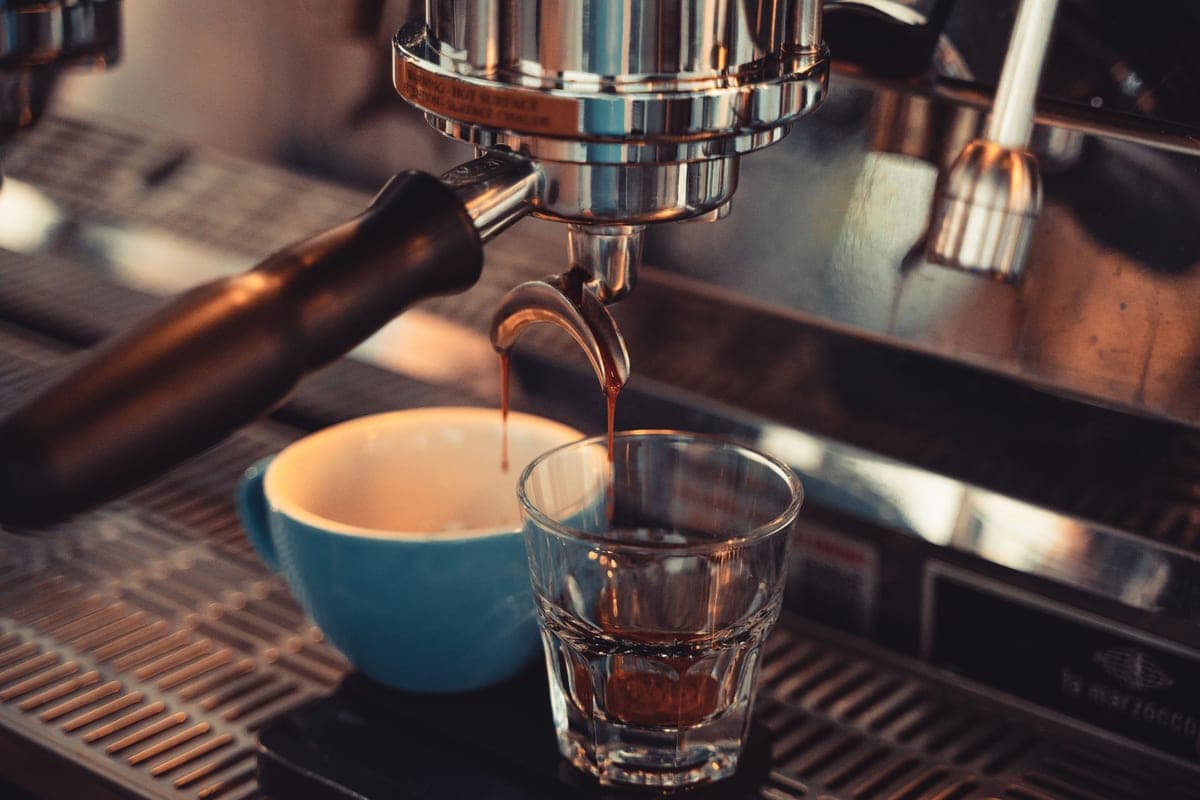
Espresso is one of those words that everyone uses and very few people can define. It gets treated as a kind of bean, a level of roast, a measure of strength, or just "strong coffee" — and it is none of those things.
Espresso is a brewing method. Specifically, it is coffee made by forcing hot water through finely ground, compacted coffee at high pressure, in a short time. That is the entire definition, and almost everything confusing about coffee menus, coffee gear and coffee marketing falls into place once you hold onto it.
The definition, with numbers
The generally accepted parameters for a modern espresso look like this:
| Variable | Typical target | What it means |
|---|---|---|
| Pressure | ~9 bar | About nine times atmospheric pressure — the defining feature |
| Grind | Very fine | Close to powdered sugar, to create resistance |
| Dose | 7-9 g single, 14-18 g double | The dry coffee packed into the basket |
| Yield | About twice the dose (1:2) | 18 g of coffee producing roughly 36 g of liquid |
| Time | 25-30 seconds | From the pump starting to the cup being pulled |
| Water | ~90-96°C / 195-205°F | Hot, but below boiling |
Those numbers describe a normaleshot — the standard. Pull the same dose shorter and you get a ristretto; pull it longer and you get a lungo. Our guide to ristretto vs espresso vs lungo covers those variations, and how to pull an espresso shot walks through hitting the numbers in practice.
What actually makes it espresso: pressure
Of everything in that table, pressure is the one that does the defining work. Every other brewing method relies on gravity or time; espresso relies on force. If you have seen machines advertised at 15, 19 or 20 bar and wondered how that squares with 9, 9 bar vs 15 bar espresso machines explains what a pump rating actually measures.
That changes what ends up in the cup in a way that time alone cannot replicate. Pressure drives water through a dense, compacted puck of very fine coffee in seconds, extracting not just the soluble flavors that any brewer gets, but also emulsified oils and suspended micro-particlesthat a slow, gravity-fed brew leaves behind. That is why espresso is not just concentrated coffee — it is physically a different kind of liquid, with a syrupy body and a weight in the mouth that no amount of brewing drip coffee stronger will reproduce.
It is also why the fine grind matters so much. The grind has to be fine enough to resistthe water — if it flows through too easily, pressure never builds and you get a pale, sour, watery shot in eight seconds. Grind too fine and almost nothing comes out. Espresso is the only method where grind size is this unforgiving, which is why a good espresso grinder matters more than the machine for most people.
What crema is (and what it isn't)
The tan-brown foam on top of a fresh shot is crema. It forms because roasted coffee holds carbon dioxide, and under nine bars of pressure that gas dissolves into the water. When the shot hits the cup and returns to normal atmospheric pressure, the gas comes back out as thousands of tiny bubbles, stabilized by the oils and fine particles the pressure carried through.
Crema is a signature of the method, not a mark of quality. It tells you the coffee was reasonably fresh and that pressure was applied. It does not reliably tell you whether the shot tastes good. Robusta beans produce noticeably more crema than Arabica regardless of quality, and pressurized baskets on entry-level machines manufacture crema artificially by forcing the liquid through a tiny hole after brewing — which is why a cheap machine can produce a thick, impressive-looking crema on top of a mediocre shot.
What espresso is not
Three persistent misconceptions, all of which come from treating a method as an ingredient.
It is not a bean.There is no espresso plant and no espresso variety. Beans sold as "espresso" are ordinary coffee beans that a roaster has roasted and blended with espresso in mind — usually a bit darker, usually a blend. You can pull any bean as espresso. We go into the detail in coffee beans vs espresso beans.
It is not a roast level."Espresso roast" is a roaster's convention, not a defined category. It usually signals medium-dark, because darker roasts hold up better under pressure, but a light-roast espresso is entirely possible — just harder to dial in.
It is not simply "strong coffee."A concentrated cup of drip coffee is not espresso, no matter how much coffee you use, because the pressure never happened. This is also the honest answer to the "stovetop espresso maker" question — a moka potruns at roughly 1–2 bar against espresso's ~9, so it makes excellent strong coffee that is not espresso. Full comparison in moka pot vs espresso machine.
Espresso vs regular coffee, side by side
| Espresso | Drip / filter coffee | |
|---|---|---|
| Pressure | ~9 bar | None — gravity only |
| Grind | Very fine | Medium |
| Brew time | 25-30 seconds | 3-5 minutes |
| Serving size | ~30 ml / 1 oz (double: ~60 ml) | 240 ml / 8 oz and up |
| Body | Syrupy, heavy, with crema | Light and clean |
| Caffeine per serving | ~60-80 mg (double shot) | ~95-165 mg (8 oz mug) |
The last row surprises people, and it leads directly into the next section.
Every cafe drink is espresso plus something
Once you know espresso is a method producing a small, concentrated shot, the cafe menu decodes itself. Almost everything on it is espresso plus water or milk, in different ratios and textures.
- Americano— espresso plus hot water.
- Latte— espresso plus a lot of steamed milk and a thin layer of foam.
- Cappuccino— espresso with less milk and a thick layer of foam.
- Flat white— espresso with steamed milk textured to a smooth microfoam, and no foam layer on top.
- Macchiato— espresso "marked" with just a spot of milk.
- Cortado— espresso cut with roughly an equal amount of warm milk.
The differences between them are milk volume and milk texture, not different coffee. If you have ever wondered why a cafe can charge differently for drinks made from the same shot, that is why. We break the close calls down in cappuccino vs latte, latte vs flat white and macchiato vs cortado.
Is espresso stronger than coffee?
Yes and no, and the distinction is worth getting right. Espresso is far more concentrated— there is much more caffeine per milliliter. But you drink much less of it.
Per serving, a standard 8 oz mug of drip coffee typically carries more total caffeinethan a double espresso, simply because it is eight times the volume. So "espresso is stronger" is true by concentration and usually false by dose. Our guide to how much caffeine is in espresso has the numbers, and coffee vs espresso compares the two drinks in full.
How to try it at home
If reading this made you want to actually pull a shot, there are two honest routes, at very different prices.
The real one is a pump espresso machine. To make espresso you need something that genuinely reaches around nine bars, and the Breville Bambinois the most sensible entry point: a 54 mm portafilter, 9-bar extraction, a three-second heat-up and an automatic steam wand for milk drinks, in a body about six inches wide. Budget for a grinderalongside it — on a real machine, the grinder matters more than the machine. Our best espresso machine for beginners guide covers the alternatives, and the true cost of home espresso does the math before you commit.
The cheap one is a moka pot, with the caveat this whole page has been making: it is not espresso. At 1–2 bar it cannot build real crema or espresso's syrupy body. What it does make is a small, strong, dark cup that works beautifully with milk, for under fifty dollars and no electricity. As a way to find out whether you actually like concentrated coffee before spending hundreds, it is hard to beat.
Prices shown are from Amazon as of October 17, 2026 and change often — the button always goes to the current listing. Some links may earn us a commission at no extra cost to you.
Frequently asked questions
What is espresso?
Espresso is a brewing method, not a bean or a roast. It's coffee made by forcing hot water through finely ground, compacted coffee at around 9 bar of pressure, producing about twice the dose in weight in 25-30 seconds — so 18 g of coffee yields roughly 36 g of liquid. The pressure is what makes it espresso rather than just strong coffee.
What's the difference between espresso and coffee?
The brewing method. Espresso uses about 9 bar of pressure through a very fine grind in 25-30 seconds; drip coffee uses gravity through a medium grind over three to five minutes. That pressure extracts emulsified oils and fine particles that gravity leaves behind, which is why espresso has a syrupy body and crema while filter coffee is light and clean.
Are espresso beans different from coffee beans?
No — they're the same beans. There's no espresso plant and no espresso variety. 'Espresso' on a bag tells you the roaster roasted and blended it with espresso in mind, usually a little darker and usually as a blend, because darker roasts hold up better under pressure. You can pull any bean as espresso.
What is crema on espresso?
The tan foam on a fresh shot. Under 9 bar of pressure, carbon dioxide from the roasted coffee dissolves into the water; when the shot returns to normal pressure in the cup, it comes back out as tiny bubbles stabilized by oils and fine particles. It's a signature of the method rather than a mark of quality — Robusta produces more of it regardless, and pressurized baskets manufacture it artificially.
Is espresso stronger than regular coffee?
By concentration, yes — there's much more caffeine per milliliter. By total dose, usually no: a standard 8 oz mug of drip coffee typically carries more caffeine (around 95-165 mg) than a double espresso (around 60-80 mg), because it's eight times the volume. So espresso is more intense but not necessarily more caffeinated per drink.
Can you make espresso without an espresso machine?
Not true espresso. Real espresso needs roughly 9 bar of pressure, and only a pump or lever machine reaches that. A moka pot runs at about 1-2 bar and makes strong, dark, espresso-style coffee — excellent with milk, but without genuine crema or espresso's syrupy body. An AeroPress applies only light hand pressure, so it makes a concentrated shot rather than espresso.
Sources
Keep reading
Buying your first setup?
See how we pick — compiled specs, cost-per-shot math, and honest trade-offs — then dig into the guides. No fake test lab, no rankings for hire.