Buying Guide
The Best Flat Burr Grinders in 2026
Flat burrs are not simply better than conical ones - they are a different cup. Five flat burr grinders on live prices, sorted by what each burr set is actually tuned for.
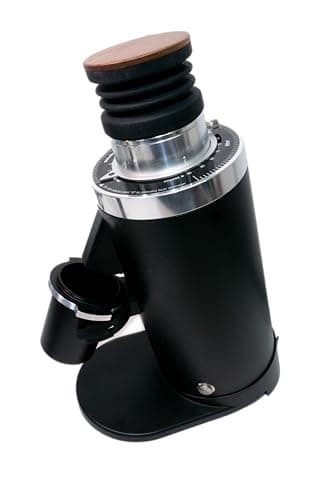
The verdict first. The best flat burr grinder for most buyers is the DF64 Gen 2 — it is for the espresso drinker who wants the biggest burr set and the cleanest single-dose workflow without moving into commercial money. The budget pick is the Eureka Mignon Notte, the cheapest genuinely stepless flat-burr grinder we would recommend to anyone. If you brew filter only, the Fellow Ode Gen 2 is built for exactly that and refuses to grind espresso on purpose; if you need one grinder for both, the Baratza Vario W+ covers the widest range here.
Every price on this page comes from the live price layer, with the as-of date printed under the comparison table.
What flat burrs actually do
Two parallel rings instead of a cone inside a cone. A flat burr set is two ring-shaped cutting surfaces facing each other; coffee is fed into the centre and travels outward between them, leaving only when it is small enough to pass the gap at the rim. A conical set feeds downward through a narrowing cone. The mechanical consequence is that a flat set gives every particle a similar path length, which is why flat burrs are associated with a narrower particle distribution at espresso fineness. Our flat vs conical burr comparison covers the mechanics properly.
In the cup, that usually reads as clarity rather than body.This is the part worth being honest about: flat burrs are not an upgrade in every direction. The usual description is that flat burrs separate flavours and conicals round them together, and plenty of drinkers prefer the conical cup — particularly for darker roasts and for milk drinks where separation matters less. If you want sweetness and body more than definition, a good conical grinder is not a downgrade.
Flat burrs cost more and ask more of you.They are bigger, they need a faster motor, and they retain more grounds in the chute unless the grinder is designed around that — which is why every flat-burr grinder here either single doses, ionizes the chute, or both. Burr size on this page runs 50mm to 64mm; the burr diameters that get people excited start where the prices do.
How we picked
Every grinder here has a live retail listing we can price, uses a published flat burr set, and is assessed against its published specifications — burr diameter and material, adjustment mechanism and resolution, motor power and burr speed, dosing method, retention figures and body construction. Our full approach is on the methodology page; we do not run a test lab and we do not pretend to.
For this page we weighted four things in order: whether the adjustment is fine enough for the brew method the grinder is sold for, how much coffee stays inside the machine between doses, how much burr you get for the money, and whether the body and burrs can be serviced. Retention figures quoted below are manufacturer figures, labelled as such, not our measurements.
At a glance
The five, on the specifications that separate them. Tap any button for the live Amazon price; the number at checkout is the one that applies.
| Grinder | Burrs | Adjustment | Dosing | Best for | Price |
|---|---|---|---|---|---|
| DF64 Gen 2 | 64mm flat, stainless | Stepless | Single dose, 50 g bellows | Best overall | $389.00Buy |
| Eureka Mignon Notte | 50mm flat, steel | Stepless micrometric | Manual, press portafilter | Budget pick | $299.00Buy |
| Eureka Mignon Facile | 50mm flat, hardened steel | Stepless micrometric | Manual, 300 g hopper | Quietest | $399.00Buy |
| Fellow Ode Gen 2 | 64mm flat, steel | 31 stepped | Single dose, ~100 g | Filter only | $319.95Buy |
| Baratza Vario W+ | 54mm flat, Ditting | 230 settings | Grind by weight, 3 presets | Espresso + filter | $599.95Buy |
Prices shown are from Amazon as of November 22, 2026 and change often — the button always goes to the current listing. Some links may earn us a commission at no extra cost to you.
Best overall flat burr grinder: DF64 Gen 2
Who it is for: the espresso drinker who single doses, rotates beans, and wants the largest burr set available without moving into cafe-grinder money.
The DF64 is the flat-burr grinder most home espresso setups should end at. 64mm flat stainless burrs, stepless adjustment with nothing out of reach, a 250W motor at about 1400 RPM, and a single-dose workflow built around a 50 g bellows hopper that pushes the chute clear. The manufacturer figure for retention is under 0.1 g, helped by a plasma generator (ionizer) that drops the static flat burrs are otherwise known for. There is also a deep aftermarket burr-upgrade path, which is unusual at this price.
| Burrs | 64mm flat (stainless steel) |
|---|---|
| Adjustment | Stepless |
| Motor | 250W, ~1400 RPM |
| Dosing | Single dose (50 g bellows hopper) |
| Retention | Under 0.1 g (manufacturer figure) |
| Static control | Plasma generator (ionizer) |
| Size / weight | 10" D x 5.2" W x 12" H, ~15 lb |
The honest cons.Stepless means there is no number to write down — you learn the dial by feel, and a setting you lose is a setting you have to find again. It is a single-dose grinder, so a household making six drinks in a row will be weighing six doses. At ~15 lb and 12 inches tall it is a real appliance, not a counter ornament. And the DF-series is sold under several brandings and generations, so buy by model and generation rather than by photograph. It is our overall pick on best espresso grinders under $500.
Budget pick: Eureka Mignon Notte
Who it is for: home espresso drinkers who want their first truly stepless flat-burr grinder and dial in mostly at espresso.
The Notte is the cheapest grinder on this page and the cheapest genuinely stepless flat-burr espresso grinder we would recommend, which is exactly what a budget pick should be. 50mm flat steel burrs, a stepless micrometric knob that lands on the exact fineness a shot wants, a ~150 g / 5.5 oz hopper, manual dosing by pressing the portafilter against the switch, and a metal case hand-assembled in Italy. The burrs come out for cleaning without losing your setting.
The honest cons.Dosing is by time and feel with no scale, so repeatability is on you. It is not sound-dampened — it runs with a sharp pitch, and the quieter Mignon models cost more (that is the Facile, below). There is some retention between doses, as with most hopper-fed flat-burr grinders. And it is really a single-purpose espresso tool: its filter range is limited and most owners leave it at espresso. Full detail in our Eureka Mignon Notte review.
Quietest: Eureka Mignon Facile
Who it is for: anyone grinding espresso early in a quiet house, or in an open-plan flat where a grinder at full pitch is a social problem.
The Facile is the Notte's argument with two upgrades: hardened steel 50mm flat burrs and Eureka's Silent System, published at about 73 dBA. It keeps the stepless micrometric dial, adds a 300 g hopper for households that do not want to refill, runs a 260W motor at 1350 RPM, and sits in an aluminium housing measuring 13.75 × 4.33 × 6.69 in.
| Burrs | 50mm flat (hardened steel) |
|---|---|
| Adjustment | Stepless micrometric |
| Motor | 260W, 1350 RPM |
| Hopper | 300 g / 10.58 oz |
| Dosing | Manual (press the portafilter against the switch) |
| Noise | Silent System, about 73 dBA (published) |
| Size / build | 13.75 x 4.33 x 6.69 in (H x W x D), aluminum housing |
The honest cons.You are paying a clear premium over the Notte for noise reduction and a bigger hopper rather than for a better grind — the burr diameter is the same 50mm. A 300 g hopper full of beans going stale is a worse problem than refilling, if you drink slowly. And like the Notte it is espresso-first with a limited filter range, and dosing is still by time rather than weight. It is our quiet pick on best espresso grinders under $500.
Best for filter coffee: Fellow Ode Gen 2
Who it is for:filter drinkers who want the clearest cup a home grinder can give for pour over, drip, AeroPress and French press — and who will never pull a shot on it.
The Ode Gen 2 is the clearest demonstration on this page that flat burrs are a tuning choice rather than a tier. It uses 64mm flat steel burrs— the same diameter as the DF64 — and deliberately bottoms out at around 250–300 microns, which is too coarse for espresso by design and ideal for filter. It is a true single-dose grinder with a ~100 g bean capacity, 31 stepped settings, anti-static technology, a magnetic catch cup and a built-in knocker.
| Burrs | 64mm flat (steel) |
|---|---|
| Grind settings | 31 stepped |
| Dosing | Single dose (~100 g bean capacity) |
| Grind range | Filter methods; bottoms out ~250-300 microns |
| Espresso | Not suitable (per Fellow) |
| Retention | Very low (single-dose design) |
| Extras | Anti-static technology, magnetic catch cup, built-in knocker |
The honest cons.It is not an espresso grinder and will never be one — Fellow says so, and that is the single most important thing to know before buying it. It is therefore single-purpose, which is hard to justify if you also want a shot. It is the priciest way to grind filter coffee at home. And 31 stepped settings is coarse resolution next to a stepless dial, though it matters far less for filter than for espresso. Full detail in our Fellow Ode Gen 2 review, and best grinders for pour over puts it against the field.
Best for espresso and filter in one: Baratza Vario W+
Who it is for: the household that pulls shots and brews pour over on the same grinder and wants a dose repeated by weight rather than by time.
The Vario W+ is the widest-range grinder here: 54mm Ditting-designed flat steel burrs across 230 settings via a macro lever plus micro steps, with a published range running from Turkish to cold brew. It is also the only grinder on this page that grinds by weight, using a load cell in the base with three dose presets, so the grinder decides when to stop rather than a timer.
The honest cons.It is the most expensive grinder on the page, and a dedicated espresso grinder at the same money will beat it on espresso alone — breadth is its argument, not peak performance. Grind-by-weight adds a component that can drift and need calibration. And it is hopper-fed, so it is not a single-dose machine. See grinders for espresso and pour over for the dual-duty problem in general, and the Baratza lineup for where it sits in its own range.
Who should not buy flat burrs
If your budget is under about $250, buy conical.There is no flat-burr grinder at that money worth owning, and a good conical grinder at $150–$200 will beat a cheap flat one comfortably. Start at best coffee grinders under $200 or best espresso grinders under $200 instead.
If you mostly drink milk drinks, the difference is small. Flat burrs buy clarity, and clarity is what milk covers up. The money is better spent on the machine or on the milk side of the setup.
If you want a grinder you can take apart on a kitchen table, check the parts path. The repairability case runs strongly in Baratza's favour across its range; it is less clear cut elsewhere on this page.
The bottom line
Buy the DF64 Gen 2 if espresso is the point and you single dose. Buy the Mignon Notte if you want the cheapest honest way into stepless flat burrs, and the Mignon Facile if noise or hopper size is the deciding factor. Buy the Fellow Ode Gen 2only if you brew filter and nothing else — and then it is superb. Buy the Vario W+ if one grinder genuinely has to do both jobs.
If you are still weighing the geometry itself, read flat vs conical burrs before you spend, and best burr grinders for the wider field including conicals.
Frequently asked questions
What is the best flat burr grinder?
The DF64 Gen 2 for most buyers: 64mm flat stainless burrs, stepless adjustment, a 50 g bellows single-dose hopper and a manufacturer retention figure under 0.1 g with a plasma ionizer in the chute. The Eureka Mignon Notte is the cheapest flat-burr grinder we would recommend, and the Fellow Ode Gen 2 is the one to buy if you brew filter only. Prices come from the live price layer with the as-of date shown.
Are flat burrs better than conical burrs?
Not universally - they are a different cup. Flat burrs give every particle a similar path between two parallel rings, which tends to produce a narrower particle distribution and a cup described as clearer and more separated. Conical burrs tend to round flavours together with more body. Many drinkers prefer the conical cup, especially for dark roasts and milk drinks. Flat burrs also cost more and retain more grounds unless the grinder is designed around it.
What is the cheapest flat burr grinder worth buying?
The Eureka Mignon Notte: 50mm flat steel burrs with a genuinely stepless micrometric dial in a hand-assembled Italian metal body. Below roughly $250 there is no flat burr grinder we would recommend - a good conical grinder at that money will outperform a cheap flat one, so look at best coffee grinders under $200 instead.
Can the Fellow Ode Gen 2 grind espresso?
No, and that is deliberate. Fellow states it is not suitable for espresso: its range bottoms out at roughly 250-300 microns, which is too coarse for a shot. It is built as a filter grinder, and within that job the 64mm flat burrs give outstanding clarity for pour over, drip, AeroPress and French press. Buying it hoping to pull espresso later is the one mistake to avoid with this grinder.
Does burr size matter more than adjustment?
For espresso, no - adjustment resolution usually matters more. A 50mm flat burr on a stepless micrometric dial, like the Mignon Notte's, is a more useful espresso grinder than a larger burr on a coarse stepped dial, because espresso lives in a narrow fineness window you have to be able to land on. For filter, where a click either side rarely ruins a cup, burr size and evenness carry more weight.
Why do flat burr grinders retain more coffee?
Grounds leave a flat burr set sideways at the rim and then have to travel through a chute to the catch cup, and static makes some of them stick on the way. That is why every grinder on this page tackles it directly: the DF64 uses a bellows plus a plasma ionizer, the Fellow Ode uses anti-static technology and single dosing, and the hopper-fed Eurekas accept some retention between doses. Retention figures quoted here are manufacturer figures, not our measurements.
Sources
- DF64 Gen 2 product and retailer specifications: 64mm flat stainless burrs, stepless adjustment, 250W ~1400 RPM motor, 50 g bellows single-dose hopper, sub-0.1 g retention (manufacturer figure), plasma generator
- Eureka - Mignon Notte and Mignon Facile product pages: 50mm flat steel burrs, stepless micrometric adjustment, hopper capacities, 260W / 1350 RPM on the Facile, Silent System published at about 73 dBA, aluminium housing dimensions
- Fellow - Ode Gen 2 Brew Grinder specifications: 64mm flat steel burrs, 31 stepped settings, ~100 g single-dose capacity, filter-only range bottoming out around 250-300 microns, anti-static technology, magnetic catch cup
- Baratza - Vario W+ product page and retailer specification sheets: 54mm Ditting-designed flat steel burrs, 230 macro/micro settings, load-cell grind-by-weight with three presets, 300 g hopper
- Amazon listings (Creators API) - live availability, current prices and brand/model title verification for every ASIN on this page before publication
Keep reading
Buying your first setup?
See how we pick — compiled specs, cost-per-shot math, and honest trade-offs — then dig into the guides. No fake test lab, no rankings for hire.