Buying Guide
The Best Grinder for a Moka Pot in 2026
A moka pot needs fine-medium grounds and nothing else will do. Five grinders that land in that band and stay there, ranked on adjustment resolution, consistency and what each one costs you.
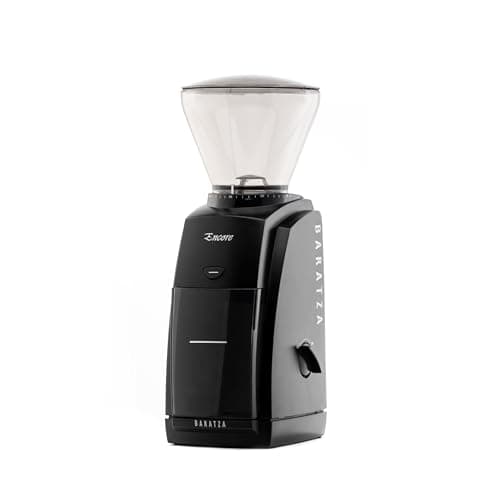
For most people the answer is the Baratza Encore, and it is the answer because of its range rather than its price. A moka pot wants a fine-medium grind — finer than drip, coarser than espresso — and the Encore's 40 settings span roughly 250 to 1200 microns, which puts the moka band in the middle of the dial instead of jammed against the fine end. If you want finer control for a fraction of the money and do not mind cranking, the Timemore Chestnut C3 ESP moves 0.0233mm per click, the finest published adjustment on this page. If the same grinder also has to feed an espresso basket, take the Baratza Encore ESP.
The reason this page exists separately from our espresso grinder guide is that moka sits in an awkward place. Grinders sold for espresso often run out of travel before they get coarse enough to be comfortable; grinders sold for filter coffee frequently cannot get fine enough without sitting at setting one. What a moka pot rewards is a grinder that treats fine-medium as a normal working setting, with enough resolution to move a notch at a time.
What grind a moka pot actually needs
Fine-medium. Our grind size chartputs it between espresso powder and table salt, and that description is doing real work: the gap between "correct" and "clogged" on a moka pot is small. The reason is pressure. A stovetop moka brews at only about 1–2 bar of steam pressure, against roughly 9 bar for a real espresso machine. There is not enough force available to push water through an espresso-fine bed, so grind too fine and the pot struggles, sputters and tastes burnt. Grind too coarse and the water runs through before it extracts anything, which is what sour, thin moka coffee usually is.
That narrow target has two consequences for buying a grinder. First, resolution matters more than burr size here— being able to move half a step is worth more than another 20mm of burr diameter. Second, consistency matters because the basket is unpressurised. A moka pot has no pressurised basket to mask an uneven bed, so a grinder that produces dust and boulders together will brew both of them and you will taste the difference.
How we ranked these
On published specifications and manufacturer documentation, not on lab tests we did not run — units we claim to have tested: zero. For a moka pot that means three things, in this order:
- Where the moka band sits on the dial. A grinder whose published range places fine-medium mid-dial is easier to live with than one that reaches it at the end of its travel.
- Adjustment resolution.Microns per step, where the manufacturer publishes it. This is the spec that decides whether "one notch finer" is a correction or an overshoot.
- Burr type and build.Conical or flat, steel, and whether the burrs and parts are user-replaceable — a grinder you can re-burr is a cheaper decade.
We do not rank on brand reputation, on a star rating we invented, or on taste impressions we cannot source. Where a manufacturer publishes a figure and a retailer publishes a different one, we say so rather than picking the flattering number.
At a glance
| Grinder | Type | Burrs | Adjustment | Price |
|---|---|---|---|---|
| Baratza Encore | Electric, hopper | 40mm conical | 40 stepped, ~250-1200 microns | $149.95Buy |
| Timemore Chestnut C3 ESP | Hand | 38mm conical | 30 clicks/turn, 0.0233mm per click | $68.00Buy |
| Baratza Encore ESP | Electric, hopper | 40mm M2 conical | 40 stepped (~20 / ~90 microns) | $199.95Buy |
| Baratza Virtuoso+ | Electric, hopper | 40mm M2 conical | 40 stepped, ~200-1200+ microns | $249.95Buy |
| 1Zpresso Q | Hand | Heptagonal conical | 30 clicks per turn (internal) | $99.00Buy |
Prices shown are from Amazon as of October 5, 2026 and change often — the button always goes to the current listing. Some links may earn us a commission at no extra cost to you.
Best overall for a moka pot: Baratza Encore
Who it is for: anyone who brews moka every morning and wants to set a dial once, press a button and get the same grind for years.
The Encore is not an espresso grinder, and on this page that is a feature. Baratza publishes a range of roughly 250 to 1200 microns across 40 stepped settings, which means fine-medium is a mid-dial setting rather than the end of its travel. You get the whole moka band with room on both sides of it, so adjusting for a darker roast or a different pot size is a one-notch move, not a re-think.
| Burrs | 40mm conical (steel, user-replaceable) |
|---|---|
| Grind settings | 40 stepped (macro ring + micro adjust) |
| Grind range | ~250-1200 microns (pour over to French press) |
| Motor | DC, gear + electronic speed reduction, ~550 RPM |
| Bean hopper | 8 oz / ~225 g |
| Espresso | Not fine enough for true espresso |
| Build | Repairable - user-replaceable burrs and parts |
What we like: the moka band sits mid-dial, the burrs and parts are user-replaceable through Baratza's US channel, and the slow ~550 RPM motor keeps the grounds cool. The honest cons: it is notan espresso grinder and Baratza says so, so do not buy it planning to add a machine later — buy the Encore ESP below instead. It is hopper-fed, which means some retention and a purge when you switch beans. And the plastic body feels its price next to the Virtuoso+.
Our full Baratza Encore review covers the long-term ownership case, and Encore vs Virtuoso+ works through whether the upgrade below is worth it.
Best budget pick: Timemore Chestnut C3 ESP
Who it is for: the moka drinker who wants real grind control on a tight budget and does not mind thirty seconds of cranking.
This is the precision pick on the page, which is a strange thing to say about the cheapest item on it. Timemore publishes the ESP dial at 30 clicks per rotation at 0.0233mm per click— roughly 23 microns — against 12 clicks at 0.0833mm on the standard C3 dial. For a brew method with a narrow target band, that finer click is exactly the spec you want, and nothing else here matches it.
| Type | Manual (hand) grinder |
|---|---|
| Burrs | 38mm S2C660 conical, SUS420 stainless, CNC-machined |
| Adjustment | Internal dial, 30 clicks per rotation, 0.0233mm per click |
| Standard C3 dial, for contrast | 12 clicks per rotation, 0.0833mm per click |
| Capacity | 20 g per Timemore's C3-series page; several retailers list 25 g |
| Body | Aluminum alloy and stainless steel, no plastic internals |
| Handle | Fixed, 159mm |
| Weight | ~430 g |
What we like: the finest published click on this page, an all-metal build at a price where plastic is normal, and a capacity that matches a three- or six-cup moka dose in one grind. The honest cons: it is a hand grinder, so every dose costs you effort — fine for one or two cups, tiring for a nine-cup pot. The dial is internal, which means changing grind involves reaching under the burrs rather than turning a ring. And because it is tuned toward the fine end, it is the wrong tool if you also want French press coarse.
Our Chestnut C3 ESP reviewhas the full model decoder — the C3S and the ESP Pro are different grinders, and the difference is the dial.
Best if you also pull espresso: Baratza Encore ESP
Who it is for: the household where a moka pot and an espresso machine share a counter, and only one grinder is going to fit on it.
The Encore ESP is the Encore platform re-geared. Baratza splits its 40 settings into an espresso half at roughly 20 microns per step and a filter half at roughly 90 microns per step, so you get fine control where espresso needs it and broad strokes where filter does. A moka pot lives right at the boundary between the two, which means you can approach fine-medium from either direction — in practice the coarse end of the espresso range is where most moka doses land.
| Burrs | 40mm M2 conical (steel, user-replaceable) |
|---|---|
| Grind settings | 40 stepped (1-20 espresso, 21-40 filter) |
| Espresso step size | ~20 microns per step |
| Filter step size | ~90 microns per step |
| Motor | DC, ~550 RPM, ~70W |
| Bean hopper | 8 oz / 230 g |
| Included | 54mm dosing cup + 58mm portafilter adapter |
What we like: one grinder genuinely covers both brewers, the espresso-side resolution is finer than the plain Encore manages anywhere on its dial, and it keeps Baratza's repairable design. The honest cons: you pay meaningfully more than the Encore for a capability a moka-only household will never use. Switching between espresso and moka means moving the dial back and forth across the boundary and purging each time. And it is the same hopper-fed design, so retention still applies.
If espresso is the main event rather than the sideline, our best espresso grinders under $200 guide ranks this bracket on espresso terms instead.
Best upgrade: Baratza Virtuoso+
Who it is for: the moka drinker who brews for several people and wants repeatable dosing without weighing every time.
The Virtuoso+ keeps the Encore's 40 stepped settings but changes what sits underneath them: 40mm M2 conical burrs from Etzinger, a 180W gear-reduced DC motor and a published range of roughly 200 to 1200+ microns. The practical upgrade for moka is speed and uniformity, plus a digital dosing timer— set it once for your pot size and the same dose comes out every morning.
| Burrs | 40mm M2 conical (Etzinger, steel) |
|---|---|
| Grind settings | 40 stepped |
| Grind range | ~200-1200+ microns |
| Motor | 180W DC, gear-reduced, ~550 RPM |
| Extras | Digital timer, LED-backlit grounds bin, replaceable burrs |
What we like: faster and more uniform than the Encore on the same settings, a timer that makes dosing repeatable, and a metal-topped build that looks its price. The honest cons: it costs substantially more than the Encore and, for moka specifically, the uniformity gain is smaller than it would be for espresso — a 1–2 bar brew is simply more forgiving. Baratza is explicit that neither the Encore nor the Virtuoso+ is a true espresso grinder. And the timer doses by seconds, not grams, so it still drifts as beans age.
Best compact and travel pick: 1Zpresso Q
Who it is for: anyone packing a three-cup moka pot into a bag, or working with a counter that has no room for an electric grinder.
The Q is the entry point of 1Zpresso's range and the smallest sensible grinder here: around 465 g with a foldable handle, a heptagonal stainless conical burr and a 30-click internal dial. It holds roughly 15–20 g per grind, which is a three-cup moka dose, and it needs no power.
| Type | Manual (travel) grinder |
|---|---|
| Burrs | Heptagonal conical (stainless steel) |
| Adjustment | Internal dial, 30 clicks/turn |
| Capacity | ~15-20 g per grind |
| Weight | ~465 g |
| Handle | Foldable (packs very small) |
What we like: light enough to justify packing, holds a full small-pot dose, and there is nothing to break or plug in. The honest cons: the adjustment is internal and fiddly, so this is a grinder you set for a trip rather than change daily. The 15–20 g capacity means two grinds for a six-cup pot. And its burrs are smaller and slower than the rest of 1Zpresso's line.
If a hand grinder is the direction but travel is not the point, our best hand grinders guide covers the wider field, and best travel coffee gear pairs it with a packable pot.
Why not a blade grinder
Because a moka basket cannot hide an uneven grind. A blade grinder chops rather than mills: it produces dust and boulders in the same batch, and a moka pot will over-extract the dust and under-extract the boulders in the same brew. That is the muddy, simultaneously bitter and sour cup people blame on the pot. Our burr vs blade comparison works through the mechanism, and the general case is in best burr coffee grinders.
Pre-ground coffee is a different trade-off. Supermarket pre-ground is usually cut for drip, which is coarser than moka wants, and it has been staling since the day it was packed. It will make coffee. It will not make the coffee the pot is capable of. If a grinder is not in the budget this month, buy pre-ground labelled for moka or espresso rather than drip, in the smallest bag you can find — and see how to store coffee beans for why bag size matters more than people expect.
How to choose
- Moka only, every day? The Baratza Encore. Mid-dial moka range, replaceable parts, press and walk away.
- Tight budget, or one or two cups a day? The Timemore Chestnut C3 ESP— the finest adjustment here, for the least money, at the cost of cranking.
- Espresso machine on the same counter? The Baratza Encore ESP. Do not buy the plain Encore and hope.
- Brewing a nine-cup pot for a household? The Baratza Virtuoso+, for the speed and the dosing timer.
- Travelling, or no counter space at all? The 1Zpresso Q.
Whichever you pick, the grinder is the upgrade that changes a moka pot most. The pot itself is a simple pressure vessel and a good one is inexpensive; what varies morning to morning is the grind. If you are still choosing the pot, our moka pot size guide and Bialetti Moka Express review cover that half of the decision, and the beans that suit a moka pot cover the other.
Frequently asked questions
What grind size does a moka pot need?
Fine-medium - finer than drip or pour over, coarser than true espresso, roughly between espresso powder and table salt. A moka pot brews at only about 1-2 bar of steam pressure against roughly 9 bar for espresso, so an espresso-fine grind gives the pot more resistance than it can push through, which sputters and tastes burnt. Too coarse and the water passes through without extracting, which tastes thin and sour.
What is the best grinder for a moka pot?
The Baratza Encore for most people. Baratza publishes a roughly 250-1200 micron range across 40 stepped settings, which places the fine-medium moka band mid-dial rather than at the end of its travel, and the burrs and parts are user-replaceable. If budget is the constraint, the Timemore Chestnut C3 ESP hand grinder moves 0.0233mm per click - the finest published adjustment of any grinder on this page - for a fraction of the Encore's price.
Can I use an espresso grinder for a moka pot?
Yes, as long as it can get coarse enough. Dedicated espresso grinders are geared for the fine end, so moka sits near the coarse limit of their travel and you may run out of adjustment. The Baratza Encore ESP handles both deliberately: its 40 settings split into roughly 20-micron espresso steps and roughly 90-micron filter steps, so a moka dose sits right at the boundary with usable control on either side.
Is a hand grinder good enough for a moka pot?
Yes, and for one or two cups it is arguably the better buy. Hand grinders in this price range use the same conical burr geometry as electrics, and the Timemore Chestnut C3 ESP publishes a finer click than any electric here. The trade is effort: a three-cup dose is a comfortable crank, a nine-cup dose is a workout, so match the grinder to the pot size you actually brew.
Do I need a burr grinder, or will a blade grinder do?
A burr grinder. A blade grinder chops instead of milling, producing dust and boulders in the same batch, and a moka pot has no pressurised basket to mask it - you get over-extracted dust and under-extracted boulders brewed together, which tastes muddy and bitter at once. If a grinder is not in the budget yet, buy pre-ground coffee labelled for moka or espresso rather than drip, in the smallest bag available.
Should I tamp the coffee in a moka pot?
No. Fill the funnel basket level and leave it. Tamping adds resistance a 1-2 bar brew has no pressure to overcome, which produces the same sputtering and bitterness as grinding too fine. Level, untamped, fine-medium grounds are the whole technique.
Sources
- Baratza - Encore product specifications (40mm conical burrs, 40 stepped settings, ~250-1200 micron range, user-replaceable parts)
- Baratza - Encore ESP product specifications (40 settings split 1-20 espresso / 21-40 filter, ~20 and ~90 micron step sizes, 230 g hopper, 54mm dosing cup)
- Baratza - Virtuoso+ product specifications (40mm M2 Etzinger burrs, 180W gear-reduced motor, digital dosing timer, ~200-1200+ micron range)
- Timemore - official Chestnut C3 series specifications (38mm S2C660 burrs, 12-click standard dial vs 30-click ESP dial, mm per click, capacity)
- 1Zpresso - Q series specifications (heptagonal stainless conical burr, 30-click internal dial, foldable handle, weight and capacity)
- Bialetti - Moka Express product information and brewing guidance
- Specialty Coffee Association - brewing and extraction standards
- National Coffee Association - how to brew coffee (moka pot)
Keep reading
Buying your first setup?
See how we pick — compiled specs, cost-per-shot math, and honest trade-offs — then dig into the guides. No fake test lab, no rankings for hire.