Alternatives
Baratza Encore Alternatives: 6 Grinders Worth Buying Instead
The Encore is the default first burr grinder for one good reason and has one hard limit. Six alternatives on live prices, each chosen because it fixes something the Encore will not.
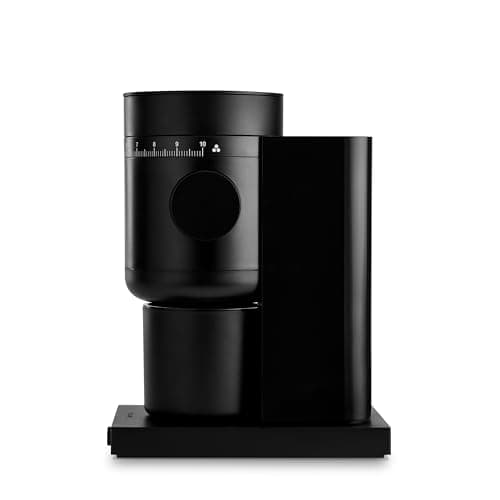
The verdict first. The best Baratza Encore alternative is the Fellow Opus 2— it is for the drinker who wants one grinder that covers espresso as well as filter, which is exactly what the Encore cannot do, for roughly the same money. If you want to dose straight into a portafilter with a repeatable timer, the Breville Smart Grinder Pro; if filter is all you brew and you want a clearly better cup, the Fellow Ode Gen 2. And the budget pick is the Timemore Chestnut C3 ESP, the cheapest grinder here that does the job — and the only one under $100 that will genuinely dial in a shot.
Every price on this page comes from the live price layer, with the as-of date printed under the comparison table. If you have not ruled the Encore out yet, read our Baratza Encore reviewfirst — for filter coffee it is still one of the best-value grinders made, and this page is for the people it does not fit.
Why people look for an Encore alternative
Because it cannot grind espresso.This is the reason, far ahead of any other. The Encore's range runs roughly 250–1200 microns— pour over through French press — and it stops short of espresso fineness. No adjustment gets it there. Buyers who did not know that before purchase are the single largest group looking for an alternative, and they are right to.
Because there is no timer, scale or dosing aid of any kind. The Encore is a switch and a dial. If you want to press one button and get the same dose tomorrow, or grind directly into a 58mm portafilter, nothing on the Encore helps you.
Because it is slow and plasticky.The low-speed DC motor at about 550 RPM is deliberate — it keeps heat and static down — but it takes its time, and the body feels like the entry-level product it is. At this price there are grinders with bigger burrs and metal housings.
Because it is hopper-fed with some retention. If you rotate between bags, grounds from the last bean end up in the next dose. Single-dose grinders exist precisely for this, and two of the picks below are built that way.
How we picked
Every grinder here has a live retail listing we can price and is assessed against its published specifications — burr diameter, type and material, adjustment mechanism and resolution, motor speed, dosing method, retention and body construction. Our full approach is on the methodology page; we do not run a test lab and we do not pretend to.
An alternatives page has a narrower job than a roundup, so each grinder here earns its slot by fixing a named Encore limitation: the missing espresso range, the missing dosing workflow, the filter ceiling, the price, or the dependence on a wall socket. A grinder that is simply another stepped filter conical at a similar price is not an alternative — it is the same purchase with a different badge, and we left those off.
At a glance
Six alternatives and what each one changes. Tap any button for the live Amazon price; the number at checkout is the one that applies.
| Grinder | Burrs | Adjustment | Espresso? | What it fixes | Price |
|---|---|---|---|---|---|
| Fellow Opus 2 | 48mm hardened conical | Stepless, ~200-1200 microns | Yes | Espresso range + near-zero retention | $159.95Buy |
| Breville Smart Grinder Pro | Stainless conical | 60 stepped + 0.2s timer | Yes | Dosing into a portafilter | $199.95Buy |
| Fellow Ode Gen 2 | 64mm flat steel | 31 stepped, filter only | No | A clearly better filter cup | $319.95Buy |
| 1Zpresso Q | Heptagonal steel conical | Stepped, external dial | Approaches it | No power needed; travels | $79.20Buy |
| Timemore Chestnut C3 ESP | 38mm S2C stainless | ~23 microns per click | Yes | Cheapest, and dials in espresso | $68.00Buy |
| OXO Brew Conical Burr | Stainless conical | 15 settings + microsettings | No | Cheaper electric with a timer | $82.49Buy |
Prices shown are from Amazon as of November 22, 2026 and change often — the button always goes to the current listing. Some links may earn us a commission at no extra cost to you.
Best alternative overall: Fellow Opus 2
Who it is for: the Encore shopper who has realised espresso is in their future, or who keeps two or three bags open at once.
The Opus 2 is the alternative that fixes the Encore's main limit for about the same money. 48mm hardened stainless conical burrs on a stepless dial covering its whole range in about 3.1 turns, with a published range of roughly 200–1200 microns— espresso through cold brew — and a retention path designed to hand back the dose you weighed in, assisted by a built-in ionizer. Both 54mm and 58mm portafilter adapters are included, plus a 100 g filter catch cup and a 30 g espresso cup.
| Burrs | 48mm hardened stainless steel conical |
|---|---|
| Adjustment | Stepless (continuous), full range in ~3.1 dial turns |
| Grind range | ~200-1200 microns, espresso through cold brew (retailer specification) |
| Motor | 300 W, ~400 RPM (retailer specification) |
| Retention | Near-zero, assisted by a built-in ionizer (per Fellow) |
| Bean hopper | 100 g, removable |
| Portafilter adapters | 54mm and 58mm, both included |
| Housing | Plastic |
| Warranty | 2 years, serviced by Fellow |
What you give up versus the Encore.The written setting: stepless means there is no number to note, so a lost setting takes work to find again, where the Encore's 40 clicks are easy to record. The 100 g hopper is a single-dose hopperwhether you wanted one or not, so a household making six drinks will weigh six doses. The housing is plastic. And Baratza's parts-and-service story is stronger. Full detail in our Fellow Opus 2 review, and Opus 2 vs Baratza Encore ESP puts it against the in-family answer.
Best if you grind into a portafilter: Breville Smart Grinder Pro (BCG820)
Who it is for:owners of a Breville or De'Longhi machine who want to dose straight into the basket and repeat it with one button.
This is the most convenient espresso-capable grinder near its price, and it fixes the Encore's complete absence of a dosing workflow. 60 stepped settings from espresso to French press, a programmable digital dose timer adjustable in 0.2-second increments, an LCD showing setting, time and shot count, and cradles that hold a 50–54mm or a 58mm portafilter under the chute— the large cradle is included, not an accessory. The housing is stainless and the hopper holds 450 g per retailer specification sheets.
| Burrs | Stainless steel conical |
|---|---|
| Grind settings | 60 stepped (espresso to French press) |
| Dose control | Programmable digital timer, 0.2-second increments |
| Display | LCD - grind setting, grind time, shot/cup count |
| Doses into | 50-54mm and 58mm portafilter cradles, or the sealed container |
| Hopper | 450 g (per retailer specification sheets) |
| Housing | Stainless steel |
| Warranty | 2 years (24 months) |
What you give up.Resolution. The dial is stepped, and with espresso you eventually find the shot you want sitting between two settings — which is the limit of this grinder rather than a flaw in it. It is also a big, tall appliance, and a timer repeats a time, not a weight, so a dose drifts as beans age. Full detail in our Breville Smart Grinder Pro review, and grinders for Breville machines covers the fitment question.
Best filter upgrade: Fellow Ode Gen 2
Who it is for: the Encore owner who brews only filter and wants the cup to be noticeably better, not merely different.
If you are looking for an alternative because the Encore is good rather than great, this is the upgrade. 64mm flat steel burrs— against the Encore's 40mm conicals — deliver outstanding clarity for pour over, drip, AeroPress and French press, and the grinder is a true single-dose design with roughly 100 g of bean capacity, very low retention, anti-static technology, a magnetic catch cup and a built-in knocker.
What you give up.Espresso, permanently — Fellow states it is not suitable, and its range bottoms out around 250–300 microns. It is single-purpose, it is the priciest way to grind filter coffee at home, and 31 stepped settings is coarse resolution next to a stepless dial. Full detail in our Fellow Ode Gen 2 review, and best grinders for pour over ranks the category.
Best alternative with no power: 1Zpresso Q
Who it is for: the one-or-two-cup-a-day drinker who wants the best grind this budget can produce, and anyone who takes coffee gear on a plane.
The Q is here because at Encore money and below, a hand grinder spends almost all of its cost on burrs and bearings rather than a motor. It uses heptagonal stainless conical burrs— a seven-sided geometry that bites the bean rather than spinning it — on a steel shaft with a foldable handle and a body small enough to pack. Capacity is a modest roughly 15–20 g, which is one filter dose or one double shot, so almost nothing stays behind in the grinder.
What you give up.Convenience: every dose costs a minute of cranking, and it is the wrong tool for a household making four drinks before work. The small capacity makes a large French press batch two or three fills. Its stepped adjustment is coarser than the C3 ESP's, so it is a filter grinder that can approach espresso rather than an espresso grinder. And note that 1Zpresso's naming is confusing — the Q, Q Air and Q2 differ, so check the model on the listing. Our best hand grinders page ranks the category.
Budget pick: Timemore Chestnut C3 ESP
Who it is for: the buyer who wanted the Encore to grind espresso and is not willing to spend more than the Encore to get it.
The C3 ESP is the cheapest grinder on this page and the only one under $100 that will genuinely dial in a shot, which makes it the budget pick twice over. Its internal dial sits beneath the burrs and moves 0.0233mm — about 23 microns — per click, 30 clicks per rotation, where the standard C3 moves 0.0833mm in 12 clicks. The burrs are 38mm S2C660 CNC-machined SUS420 stainless conical, the body is aluminium alloy and stainless with no plastic internals, and the shaft is dual-bearing.
| Type | Manual (hand) grinder |
|---|---|
| Burrs | 38mm S2C660 conical, SUS420 stainless, CNC-machined |
| Adjustment | Internal dial beneath the burrs - 30 clicks per rotation, 0.0233mm per click |
| Grind range | Espresso through pour over to French press |
| Capacity | 20 g per Timemore's C3-series page; several retailers list 25 g |
| Body | Aluminum alloy and stainless steel, no plastic internals |
| Handle | Fixed, 159mm (the foldable handle is the ESP Pro's feature) |
What you give up.Grinding 18 g fine by hand takes real effort and about a minute, every time — a poor fit for several shots back to back. Capacity is small, and published figures disagree (Timemore says 20 g, several retailers list 25 g), which is worth knowing rather than trusting. The dial lives under the catch cup, which is less convenient than an external ring. Full detail in our Timemore Chestnut C3 ESP review.
Cheapest electric alternative: OXO Brew Conical Burr Grinder
Who it is for: the drinker who wants to push a button rather than turn a handle, brews filter, and wants to spend less than an Encore.
The OXO is the cheapest electric on this page and the straightforward answer if the Encore's price is the problem but a motor is not negotiable. Stainless steel conical burrs, 15 grind settings with additional microsettings covering fine drip through coarse cold brew, a UV-blocking hopper holding up to 3/4 lb (12 oz) of beans, and a one-touch start whose timer remembers your last setting. The grounds container is designed to cut static.
What you give up.Published specifications: OXO lists neither a burr diameter nor a micron-per-step figure, where Baratza publishes both. It does not reach espresso. A published review at Coffeeness found grind consistency weak at the coarse end and was reluctant to recommend it for French press on that basis — we have not run that comparison ourselves, so we pass the finding on rather than endorse or dismiss it. And OXO sells several similar-looking grinders at different setting counts, so buy by model name, not by photograph. It is our electric pick on best coffee grinders under $100.
The in-family answer: Baratza Encore ESP
If the only thing wrong with your Encore is that it will not grind espresso, the simplest alternative is the Encore ESP rather than another brand. It is the same chassis with its 40-setting dial re-mapped: settings 1–20 move in roughly 20-micron espresso steps and 21–40 in roughly 90-micron filter steps, on 40mm M2 conical burrs, and it ships with a 54mm dosing cup and a 58mm portafilter adapter. You keep Baratza's user-replaceable parts and service path, which is the Encore's strongest argument in the first place.
Our Encore vs Encore ESP page compares the two directly, the Encore ESP review has the full specification, and the full Baratza lineup shows where both sit in the range.
The bottom line
Buy the Fellow Opus 2 if you want one grinder for espresso and filter at about Encore money. Buy the Breville Smart Grinder Pro if dosing into a portafilter is the daily annoyance. Buy the Fellow Ode Gen 2 if filter is everything and you want a real step up. Buy the 1Zpresso Q if you want the best grind per dollar and do not mind cranking, the Timemore C3 ESP if espresso matters and the budget does too, and the OXO Brew if you just want a cheaper electric.
And if what you actually want is the Encore with espresso added, buy the Encore ESP and keep the parts path. For the wider field, see best coffee grinders under $200 and our coffee grinder buying guide.
Frequently asked questions
What is the best alternative to the Baratza Encore?
The Fellow Opus 2. Its stepless dial covers roughly 200 to 1200 microns on 48mm hardened conical burrs - espresso through cold brew - for about what an Encore costs, with near-zero retention and both 54mm and 58mm portafilter adapters in the box. That fixes the Encore's main limitation, which is that it cannot grind espresso at all. Prices come from the live price layer with the as-of date shown.
Why can't the Baratza Encore grind espresso?
Its range runs roughly 250 to 1200 microns - pour over through French press - and it simply stops before espresso fineness. No amount of adjustment gets it there. Baratza built the Encore ESP to fix exactly this by re-mapping the same 40-setting dial so settings 1-20 move in roughly 20-micron espresso steps. If espresso is in your plans, start at the ESP or at one of the alternatives on this page.
Is there a cheaper alternative to the Baratza Encore?
Two on this page. The Timemore Chestnut C3 ESP is the cheapest, and the only grinder here under $100 with a dial fine enough for espresso at about 23 microns per click - the cost is a minute of hand cranking per dose. The OXO Brew Conical Burr Grinder is the cheapest electric, with stainless conical burrs, 15 settings plus microsettings and a one-touch timer, though it does not reach espresso.
Is the Fellow Opus 2 better than the Baratza Encore?
On mechanism, yes - bigger 48mm burrs, stepless adjustment and a range that includes espresso, against the Encore's 40mm conicals, 40 clicks and filter-only range. On ownership, the Encore has the stronger case: user-replaceable burrs and parts with a real service operation behind them. Choose the Opus 2 for capability, the Encore for longevity.
Which Encore alternative is best for pour over?
The Fellow Ode Gen 2, by a clear margin - 64mm flat steel burrs give outstanding clarity for pour over, drip, AeroPress and French press, and it single doses with very low retention. The catch is that Fellow states it is not suitable for espresso, since its range bottoms out around 250-300 microns. If filter is all you brew, that is not a cost.
Should I buy the Encore ESP instead of switching brands?
If the only problem is the missing espresso range, yes. The Encore ESP keeps the chassis, the user-replaceable parts and the service path, and re-maps the dial so settings 1-20 move in roughly 20-micron espresso steps with 21-40 for filter. It also ships with a 54mm dosing cup and a 58mm portafilter adapter. Look at other brands if you also want stepless adjustment, bigger burrs, or single dosing.
Sources
- Baratza - Encore and Encore ESP specifications: 40mm conical and 40mm M2 conical burrs, 40 stepped settings, ~250-1200 micron Encore range, ESP dial mapped 1-20 espresso (~20 microns/step) and 21-40 filter (~90 microns/step), ~550 RPM motor, user-replaceable parts
- Fellow - Opus 2 and Ode Gen 2 specifications: 48mm hardened conical burrs with stepless adjustment over ~3.1 turns and ~200-1200 micron range on the Opus 2; 64mm flat steel burrs, 31 stepped settings and a filter-only range bottoming out around 250-300 microns on the Ode
- Breville - Smart Grinder Pro (BCG820) specifications and retailer spec sheets: stainless conical burrs, 60 stepped settings, 0.2-second programmable dose timer, 50-54mm and 58mm portafilter cradles, 450 g hopper, 2-year warranty
- Timemore - Chestnut C3 series specifications: 38mm S2C660 CNC-machined SUS420 stainless conical burrs, internal dial at 0.0233mm per click over 30 clicks per rotation on the ESP, 20 g stated capacity, fixed 159mm handle
- OXO - Brew Conical Burr Coffee Grinder product page: 15 grind settings plus microsettings, stainless steel conical burrs, UV-blocking hopper up to 3/4 lb (12 oz), one-touch start with timer
- Coffeeness - OXO coffee grinder review: published finding that grind consistency is weak at the coarse end (cited here as an attributed third-party finding, not our own test)
- 1Zpresso - Q series specifications: heptagonal stainless conical burrs, foldable handle, compact travel body
- Amazon listings (Creators API) - live availability, current prices and brand/model title verification for every ASIN on this page before publication
Keep reading
Buying your first setup?
See how we pick — compiled specs, cost-per-shot math, and honest trade-offs — then dig into the guides. No fake test lab, no rankings for hire.