Explainer
Single Shot vs Double Shot Espresso
A double is not just twice as much coffee - it is a different basket shape that is genuinely easier to brew well. That is why cafes default to it, and why your machine probably should too.
Pull doubles. A double shot is not simply two singles — it uses a wider, shallower basket that is genuinely easier to prepare evenly, which is why nearly every home machine ships a double basket as the default and nearly every cafe pulls doubles all day. A single basket is narrower and deeper for the same tamp, and a deep narrow coffee bed is more prone to channelling— water finding a fast path through one part of the puck and barely touching the rest. The result is a shot that tastes simultaneously bitter and weak.
The dose difference is roughly half. On a 58mm basket a double is commonly around 18 g yielding about 36 g in the cup at a 1:2 ratio; a single is commonly 7–9 g yielding about twice that. Our how many grams for a double shot guide has the dose figures by basket size. This page is about the choice— which one to pull, and why the answer is almost always the double.
The short answer
- Default to a double.Easier to prepare, easier to repeat, and it is what your machine's baskets and your recipes assume.
- Want a smaller, less caffeinated drink?Pull a double and drink part of it, or use less milk. Do not pull a single to get a weaker drink — you will likely get a worse one.
- Want a more concentrated small drink? Pull a ristretto— the same dose stopped earlier. See ristretto vs espresso vs lungo.
- Pulling singles on purpose? Legitimate, and harder. Budget for a distribution tool and a scale.
The numbers side by side
| Single shot | Double shot | |
|---|---|---|
| Dose (58mm) | ~7-9 g | ~18 g (14-20 g baskets exist) |
| Yield at 1:2 | About twice the dose | ~36 g |
| Basket shape | Narrower and deeper | Wider and shallower |
| Extraction time | Similar - roughly 25-30 s | Roughly 25-30 s |
| Prone to channelling | More | Less |
| Shipped as default | Rarely on home machines | Nearly always |
| What recipes assume | Almost never | Almost always |
One number people expect to differ and which does not: extraction time. Both shots target roughly the same 25–30 second window, because the grind is adjusted so that the water takes the same time to pass through whichever bed depth it faces. A single that runs in twelve seconds is not a fast single, it is a badly ground one.
Why the basket makes a double easier
This is the part most explanations skip, and it is the entire reason the double won.
A portafilter basket is a fixed diameter — 58mm, 54mm or 51mm depending on your machine, as our portafilter size guide sets out. To hold half as much coffee, a single basket cannot get narrower in the way that matters; it is manufactured with a smaller internal well, so the coffee bed ends up comparatively deep and narrow rather than wide and shallow.
Deep and narrow is bad for two reasons. First, a deeper bed is harder to distribute evenly before tamping — clumps from the grinder sink and stay clumped, and your tamp only levels the surface. Second, pressurized water takes the path of least resistance, and in a deep bed any weak spot becomes a channel that the water keeps widening for the whole shot. You get over-extracted bitter coffee from the channel and under-extracted sour coffee from everywhere else, in the same cup. Our why is my espresso bitter and why is my espresso sour guides describe both ends of that at once.
A double basket's wider, shallower bed forgives imperfect distribution, which is why a beginner pulling doubles gets drinkable coffee in week one and a beginner pulling singles often does not.
Caffeine, honestly
A double shot contains roughly twice the caffeine of a single, because it contains roughly twice the coffee. That is the whole relationship — caffeine tracks the dose, not the volume in the cup and not the brew time.
Two things follow that surprise people. A lungo— the same dose pulled longer to a larger volume — has essentially the same caffeine as the normal shot it came from, despite being a bigger drink. And a ristretto, stopped early, has slightly less than the full shot but far more than a single, because the dose was never reduced. Our how much caffeine is in espresso guide covers the figures, and ristretto vs espresso vs lungo covers the three shot lengths.
If reducing caffeine is your actual goal, reducing the dose is the lever — and the clean way to do that is to pull a double and drink half of it, or to buy decaf, not to fight a single basket.
When a single is the right call
There are real cases, and it is worth naming them rather than pretending the single basket is useless:
- You are dialing in an expensive bag of coffee. Singles waste less coffee per attempt. The catch is that a single-basket shot does not tell you much about how the same grind will behave in a double, so the saving is partly illusory.
- You want a traditional small macchiato or cortado.A single with a small amount of milk is the classic build — see macchiato vs cortado.
- Your machine only has a single basket. Some very compact and entry-level machines do, in which case the question is settled for you.
- You genuinely want half the caffeine and only one drink.Fair enough — just expect the shot to need more careful preparation.
If you are pulling singles regularly, two things stop being optional: a distribution tool to break up clumps in that deep bed, and a scale, because an inaccurate 8 g dose is proportionally twice the error an inaccurate 18 g dose is.
What this means for milk drinks
Nearly every modern milk drink is built on a double, and the ratios in every recipe you will find assume it. A cappuccino, a latte and a flat white are differentiated by milk volume and foam texture rather than by shot count — our cappuccino vs latte and latte vs flat white guides lay out the standard builds.
Put a single into a 10 oz latte and the coffee disappears: the milk swamps it, and you get sweet warm milk with a hint of coffee. That is the most common reason a home latte tastes like nothing. The fix is more coffee, not less milk — which is another way of saying: pull a double. In a very small drink like a cortado or a traditional macchiato, where there is only a couple of ounces of milk, a single can hold its own.
The better way to make a smaller drink
If what you want is a smaller, more intense espresso, the answer is a ristrettorather than a single. You keep the full dose — say 18 g — and stop the shot early, at around 18–27 g of yield instead of 36 g. The result is more concentrated and syrupy, not weaker, and it is pulled in the easy-to-prepare double basket.
That distinction — smaller volume versus weaker coffee — is the one that clears up most confusion here. A single is a smaller amount of coffee. A ristretto is a smaller amount of water through the same coffee. They produce entirely different drinks, and only one of them is easy to get right. Our ristretto vs espresso vs lungo guide has the ratios, and how to pull an espresso shot covers the method either way.
The scale that settles it
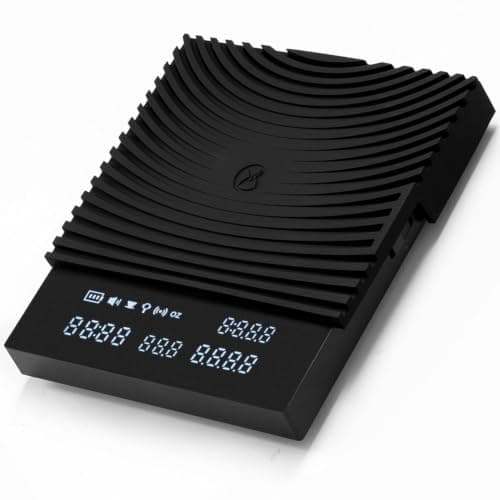
You cannot tell a single from a double by looking at the cup, and you certainly cannot tell a 16 g dose from an 18 g one. Weighing in and weighing out is what turns espresso from guesswork into a recipe, and it is the cheapest accuracy available — our do I need a scale for espresso guide makes the full case.
| Precision | 0.1 g |
|---|---|
| Max weight | 2 kg / 2000 g |
| Timer | Built-in (auto and manual) |
| Flow rate | Real-time display |
| Size | Compact (fits most drip trays) |
| Power | USB-C rechargeable |
The real-time flow rate is the feature that matters here: it shows you the shot accelerating mid-pull, which is the signature of a channel forming — the failure a single basket is most prone to. The honest cons: it costs several times what a basic scale does, and USB-C charging means one more cable.
Our best coffee scales guide covers cheaper options that still hit 0.1 g.
Seeing what went wrong
A bottomless portafilter has no spout, so you watch the underside of the puck while the shot runs. Even extraction looks like a single conical stream; a channel looks like a jet firing sideways. For anyone trying to work out why their singles taste bad, it is the most direct diagnostic there is.
| Size | 58mm |
|---|---|
| Includes | Double basket and wood handle |
| Use | Diagnostic - watch the puck extract |
| Fits | 58mm machines (Gaggia Classic, Rancilio Silvia and similar) |
The honest cons: it sprays if the puck is badly prepared, so your first few shots may redecorate the machine, and it is a 58mm part — check your machine's size first using our portafilter size guide. Breville 54mm owners need a different part, which our bottomless portafilter guide covers.
If you pull singles anyway
A WDT tool — a set of fine needles you stir through the dry grounds before tamping — breaks up the clumps that cause channelling. It helps in any basket and it helps most in a deep, narrow single basket, because that is where clumps do the most damage and where a tamp can least compensate for them.
| Type | Needle distribution tool (WDT) |
|---|---|
| Use | Stir dry grounds to break clumps before tamping |
| Includes | Stand |
| Why it helps singles | Deep narrow beds clump more and tamp less evenly |
The honest cons: it adds a step to every shot, and the needles bend if you are careless. Our best WDT tools guide covers the field, and how to tamp espresso covers what to do after you have stirred.
Prices shown are from Amazon as of October 18, 2026 and change often — the button always goes to the current listing. Some links may earn us a commission at no extra cost to you.
The bottom line
Pull doubles unless you have a specific reason not to. The double basket is wider and shallower, it forgives the distribution mistakes everyone makes, it is what your machine shipped with, and it is what every recipe and every milk-drink ratio assumes. A single is not a gentler or simpler version of a double — it is the harder shot to pull well, which is exactly backwards from how most beginners assume it works.
If you want less coffee, pull a double and drink part of it. If you want a smaller, stronger drink, pull a ristretto. And whichever you pull, weigh the dose and weigh the yield — the difference between a single and a double stops being a mystery the moment there is a scale under the cup.
Frequently asked questions
What is the difference between a single and a double shot of espresso?
A double uses roughly twice the coffee - commonly around 18 g on a 58mm basket against 7 to 9 g for a single - and yields roughly twice as much in the cup. The less obvious difference is basket geometry: a single basket holds its smaller dose in a narrower, deeper bed, which is harder to distribute and tamp evenly and therefore more prone to channelling. Both shots target the same roughly 25 to 30 second extraction.
Should I pull a single or a double shot?
A double, in almost every case. It is the basket your machine shipped with as the default, the shape that forgives imperfect puck preparation, and the shot every recipe and milk-drink ratio assumes. Pull a single only for a specific reason - a traditional small macchiato, dialing in an expensive bag, or a machine that only has a single basket.
Does a double shot have twice the caffeine of a single?
Roughly, yes, because caffeine tracks the dose and a double uses about twice the coffee. What does not change caffeine much is shot length: a lungo pulled from the same dose has essentially the same caffeine as a normal shot despite being a larger drink, and a ristretto has slightly less than a full shot but far more than a single.
Why is a single shot harder to pull than a double?
Because of the bed shape. A single basket's smaller well makes the coffee bed comparatively deep and narrow, and a deep bed is harder to distribute evenly - grinder clumps sink and stay clumped, and tamping only levels the surface. Pressurized water then exploits any weak spot as a channel, producing a shot that tastes bitter and sour at the same time. A double's wider, shallower bed forgives far more.
Can I use a single shot in a latte?
You can, but it is the most common reason a home latte tastes of nothing. In a 10 oz drink the milk swamps a single, so you get sweet warm milk with a hint of coffee. Use a double for anything latte-sized and keep singles for very small milk drinks like a cortado or a traditional macchiato, where there are only a couple of ounces of milk to balance.
How do I make a smaller espresso drink without pulling a single?
Pull a ristretto: keep the full dose, around 18 g, and stop the shot early at roughly 18 to 27 g of yield instead of 36 g. You get a smaller, more concentrated drink out of the easy-to-prepare double basket. The distinction worth remembering is that a single is less coffee, while a ristretto is less water through the same coffee - and only one of them is easy to get right.
Sources
- Specialty Coffee Association - espresso brewing and extraction standards
- Breville - Razor dose trimming tool guidance and basket documentation (54mm dose reference)
- Rancilio Group - Silvia technical specification (58mm portafilter, 8 g and 16 g standard baskets, 14/18 g available)
- Timemore - Black Mirror Basic 3 specifications (0.1 g precision, 2 kg capacity, timer, real-time flow rate, USB-C)
- Normcore - WDT distribution tool V3 product documentation
Keep reading
Buying your first setup?
See how we pick — compiled specs, cost-per-shot math, and honest trade-offs — then dig into the guides. No fake test lab, no rankings for hire.