Alternatives
AeroPress Alternatives: Seven Brewers Worth Comparing
The AeroPress is known for one thing above all: a sealed immersion brew pushed through a paper micro-filter in under two minutes, for about the price of a bag of good beans, in a body you can drop. Seven alternatives, each picked because it fixes a specific thing about it - and one section on why you might just keep the AeroPress.
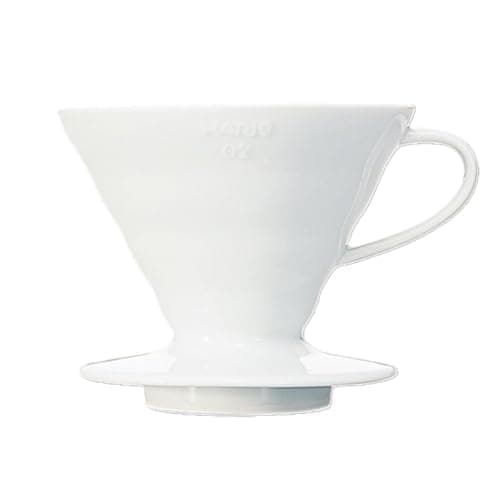
The short answer first. The best AeroPress alternative for most people is the Hario V60 Ceramic Dripper 02, because it answers the objection people actually have — hot water sitting in a plastic chamber — while brewing an even cleaner cup through paper. If your problem is that an AeroPress makes one or two cups and you need thirty ounces, buy a Chemex Classic 6-Cup. If you want the heavier body a metal filter gives you, the ESPRO P3 is the press that filters the grit out of that idea, and the Frieling is the one that will outlive your kitchen. And the budget pick is the OXO Brew Pour-Over, which costs less than the AeroPress and is the only brewer on this page that does not expect you to own a gooseneck kettle.
Every price on this page comes from the live price layer with the as-of date under the table. That matters here more than on most pages, because the AeroPress itself is a cheap brewer: an alternative is only a sensible purchase if the gap between the two is small, or if the thing it fixes is worth the difference to you. Check both numbers before you decide.
What the AeroPress is known for
It is worth being precise about this, because the AeroPress earned its following and the brewers below are measured against it rather than sold over it.
The AeroPress combines full immersion— coffee steeping in water, the way a French press works — with light hand pressure and a paper micro-filter. That combination is unusual. Immersion makes it forgiving: the grind can be a long way off and the cup is still drinkable, which is why it is the brewer most often recommended to someone who has never weighed coffee in their life. The paper filter then strips the oils and fines that a French press leaves behind, so the result is clean and low in bitterness rather than heavy. It brews in roughly one to two minutes, the whole thing is one piece of polypropylene and a plunger, and there is nothing in it to break. Our AeroPress buying guide covers the four models in the range, and how to use an AeroPress covers the method.
| Brew style | Full immersion plus light hand pressure |
|---|---|
| Material | Polypropylene (BPA and phthalate free) |
| Chamber capacity | 10 oz / ~296 ml |
| Yield | 1-2 cups (up to 3 espresso-style shots) |
| Filter | Paper micro-filter (metal discs available) |
| Grind | Medium-fine |
| Brew time | About 1-2 minutes |
Note the two numbers that drive most of this page: a 10 oz chamber and a plastic body. Almost every search for an alternative traces back to one of them.
Why people look elsewhere
Five specific objections account for nearly all of it, and knowing which one is yours makes this page short.
1. The plastic.This is the most common one by a wide margin, and it is worth separating the two halves of it. The chamber is BPA-free and phthalate-free polypropylene, and we found no published evidence that it is unsafe at brewing temperatures — we are not going to pretend otherwise. But plenty of people simply do not want near-boiling water sitting in plastic for two minutes, and plenty more want a brewer that looks and feels like an object rather than a tool. Both are legitimate reasons to buy ceramic, glass or steel, and four of the seven picks below have no plastic in the brew path at all.
2. The ceiling. Ten ounces in the chamber means one mug, or two small ones, or three espresso-style shots to be diluted. There is no version of the standard AeroPress that brews a carafe. If two people want coffee at the same time, you brew twice.
3. The filters. The paper micro-filters are a consumable, they are proprietary, and running out of them on a Sunday morning means no coffee. A metal disc fixes the supply problem but changes the cup, because it is the paper that makes an AeroPress taste like an AeroPress.
4. The plunge. Pressing takes real hand and shoulder force, especially at the finer grinds the better recipes use. For anyone with arthritis or a weak grip it is the whole objection, and no amount of technique makes it go away. Drippers and presses need almost no force.
5. The cup itself.An AeroPress makes a clean, bright, medium-bodied coffee. It cannot make the thick, syrupy, espresso-adjacent drink a moka pot makes, and — despite decades of marketing language about "espresso style" — it does not generate anything like 9 bar, so it cannot pull real espresso either. If you bought one expecting espresso, the alternative you want is a pressure brewer, not another immersion device.
How we picked
Each brewer below has a live retail listing we can price, and is assessed against its published specifications — material, capacity, filter type and whether the filters are proprietary, what else you must own to use it, and how much technique it demands. Our full approach is on the methodology page; we do not run a test lab and we say so.
The selection rule here is narrower than for a normal roundup: a brewer earns a place only if it fixes one of the five objections abovewhile staying in the same broad category of purchase — a manual brewer you operate by hand, for roughly manual-brewer money. That is why there is no $600 espresso machine on this page. "Spend fifteen times as much" is not an alternative, it is a different question, and the best beginner espresso machines is the page for it.
One more rule, specific to this page: capacity is counted honestly. Several of these brewers quote "cups" that are nothing like a mug — a Chemex "cup" is 5 oz and a moka pot "cup" is about 1.5 oz. Where that matters we give the ounces instead.
At a glance
The seven, and the thing each one fixes. Tap any button for the live Amazon price; the number shown at checkout is the one that applies.
| Brewer | What it fixes | Material | Filter | Price |
|---|---|---|---|---|
| Hario V60 Ceramic 02 | Plastic in the brew path | Ceramic | Paper (V60 02 cones) | $25.00Buy |
| Chemex Classic 6-Cup | The one-to-two-cup ceiling | Borosilicate glass | Thick bonded paper | $47.03Buy |
| ESPRO P3 (32 oz) | Paper filters, thin body | Borosilicate glass | Double steel micro-filter | $29.06Buy |
| Frieling Double-Wall (36 oz) | Plastic, breakage, heat loss | 18/10 stainless | Dual steel mesh | $139.95Buy |
| Bialetti Moka Express 6-cup | A thin, clean-tasting cup | Aluminum | None (metal basket) | $48.22Buy |
| WACACO Picopresso | It is not espresso | Aluminum and steel | 52mm naked basket | $103.92Buy |
| OXO Brew Pour-Over | Price, and the plunge | Plastic tank, steel base | #2 cone paper | $15.99Buy |
Prices shown are from Amazon as of November 22, 2026 and change often — the button always goes to the current listing. Some links may earn us a commission at no extra cost to you.
Best overall alternative: Hario V60 Ceramic Dripper 02
Fixes:plastic in the brew path — and makes an even cleaner cup.
The V60 is the brewer most AeroPress owners end up adding, and it is the closest thing to a like-for-like swap on taste philosophy. Both brewers chase clarity through paper; the V60 just does it with percolation instead of immersion, so water passes through the bed once and leaves rather than sitting in it. The ceramic cone has a 60-degree wall, a single large drain hole and spiral ribs that keep the paper off the sides so air can escape, and size 02 handles one to four of Hario's cups— comfortably a large mug, which is already more than a standard AeroPress chamber. Nothing in the brew path is plastic: ceramic, paper, your mug. Our Hario V60 review goes through it in detail.
The honest cons.It is much less forgiving than an AeroPress, and that is the trade. Percolation gives you no steep time to hide behind, so grind, pour rate and temperature all show up in the cup — which in practice means you also need a gooseneck kettle and a scale to get consistent results, and those cost more than the dripper. Ceramic has real thermal mass, so it needs a pre-heat rinse or the first part of the brew runs cold. It chips if you knock it against a tap. And it brews one vessel at a time, so it only partly answers the capacity objection.
Best for more than one cup: Chemex Classic 6-Cup
Fixes: the one-to-two-cup ceiling.
This is the pick if the actual problem is arithmetic. The Classic 6-Cup brews about 30 ozin one go — Chemex counts 5 oz to a cup — into a single piece of borosilicate glass with a wood collar and leather tie, and you serve from the same vessel you brewed in. The filters are the point of difference: Chemex papers are thick and bonded, folded to several layers on one side, which strips more oil and more fine particulate than any other paper in home coffee. If you liked the AeroPress because it tasted clean, a Chemex is the same instinct taken further. See Chemex vs V60 for how the two paper routes differ.
The honest cons.Those thick filters are proprietary and cost noticeably more per brew than V60 papers, so you have swapped one filter dependency for a pricier one. They also strip body aggressively: a coffee you love in an AeroPress can taste thin and tea-like in a Chemex, and there is no way to dial that back. It is glass with no handle beyond the collar, so it breaks, and the narrow neck makes it awkward to wash. A full 30 oz brew takes four to five minutes of attentive pouring with a gooseneck kettle — roughly three times the AeroPress routine — and brewing a single small cup in it works badly, because the bed is too shallow.
Best for body without paper: ESPRO P3 French Press
Fixes: the paper-filter supply problem, and a cup you find too thin.
A French press is the other full-immersion brewer, so the steeping forgiveness that made you buy an AeroPress carries straight over — you just lose the paper. The P3 is the press we point at because of how it handles that. Instead of one coarse mesh screen it uses a double micro-filter: two stacked screens, so the plunger traps far more of the fine sediment that makes an ordinary press muddy at the bottom of the mug. The carafe is borosilicate glass at 32 oz, so it also answers the capacity objection, and there are no consumables at all — nothing to run out of, ever. Our French press roundup ranks it against the rest of the field.
The honest cons.It is still a metal filter, so you get oils and some fines in the cup by design — if you chose the AeroPress specifically for clarity you may not like it, and that is a taste difference, not a defect. Coarse grind is mandatory and an inconsistent grinder shows up immediately as sludge, so a press is only forgiving once your grinder for French press is up to it. The two screens are more parts to rinse than a single mesh. The glass carafe breaks and is not insulated, so a 32 oz brew goes lukewarm long before you finish it. And you should decant immediately: coffee left sitting on the grounds keeps extracting and turns bitter.
Best plastic-free and unbreakable: Frieling Double-Wall French Press
Fixes: plastic, breakage and heat loss, all at once.
If the plastic is the objection and you want to solve it permanently, this is the brewer. The Frieling is 18/10 stainless steel throughout with a double-wall vacuum-insulated body, a 36 ozcapacity and a dual-screen mesh filter. There is no glass to shatter, no plastic touching hot water, and the insulation means the last cup of a big brew is still hot — the single thing every glass press gets wrong. It is dishwasher-safe, and it is the one brewer here you can reasonably expect to still be using in twenty years.
The honest cons. It costs several times what an AeroPress costs, which is a lot of money for a filter screen and a jug, and the cup it makes is a standard French press cup rather than something better. The steel body is opaque, so you cannot see the brew or the level and have to go by weight. It is heavy. Like any mesh press it passes oils and fines, so it is the wrong direction entirely if you wanted more clarity. And the insulation that keeps coffee hot also keeps it extracting, so decanting still matters.
Best for a stronger, espresso-adjacent cup: Bialetti Moka Express
Fixes: a cup you find too thin and too clean.
The moka pot is the alternative that changes the drink rather than the device. Steam pressure in the sealed base — roughly 1 to 2 bar, not the 9 bar of a real espresso machine — pushes water up through a packed metal basket and out into the top chamber, and what arrives is concentrated, syrupy and strong in a way no immersion brewer gets near. It is the cup that works in milk: a moka pot plus a frothed mug of milk is a credible latte, which an AeroPress struggles to deliver. The 6-cup Moka Express makes about 9 oz of that concentrate, which is two generous milk drinks. Our Moka Express review and AeroPress vs moka pot set the two side by side, and moka pot sizesexplains why "6-cup" is not six cups.
The honest cons.It is the least forgiving brewer on this page in one specific way: the heat is in your hands, and leaving it on the burner past the gurgle scorches the coffee into something genuinely unpleasant. The yield is fixed — a 6-cup pot wants filling to its 6-cup line, so you cannot brew one small cup in it. The classic aluminum body is not induction-safe and should not go in a dishwasher. There is no paper anywhere, so oils and fines come through. And the aluminum needs seasoning and gentle hand-washing to stay sweet-tasting.
Best for real espresso away from home: WACACO Picopresso
Fixes: the fact that an AeroPress is not an espresso maker.
A large share of AeroPress disappointment comes from the phrase "espresso style". If what you wanted was a real shot — crema, 25 to 30 seconds, something you could pour milk into and call a flat white — the honest alternative is a hand pump, and the Picopresso is the one that takes it seriously. It uses an 18 g naked 52mm basket, which is a genuine double-shot dose in a commercial-style basket rather than a pressurized gimmick, and the pump reaches espresso pressure by hand. It is small enough to pack, needs no power, and you bring your own hot water. Our portable espresso maker roundup ranks it against the rest of the field.
The honest cons. A naked 18 g basket demands an espresso-fine, genuinely consistent grind, which means a capable hand grinderon top of the purchase price — realistically doubling it. There is no pressure gauge, so you are learning by feel. It is physical work for every single shot, and the routine is three or four minutes of dosing, distributing, tamping, pumping and cleaning, against about ninety seconds for an AeroPress. The yield is one small shot. And none of that effort gets you steamed milk: you still need a separate milk frother.
Budget pick: OXO Brew Pour-Over Coffee Maker
Fixes: price, the plunge, and the gooseneck kettle every other dripper assumes.
This is the cheapest brewer on the page and usually cheaper than the AeroPress itself, which makes it the low-risk way to find out whether you prefer a paper-filtered drip cup. The trick is the water tank that sits on top of a flat-bottom brew basket: you pour the whole dose of water in at once and the perforated base releases it evenly over the bed, so the pour technique a V60 or Chemex demands is handled for you. That means no gooseneck kettle, no timing, no stream control — and no plunging, which matters if hand strength was your reason for leaving. It uses common #2 cone filters rather than a proprietary paper. It appears in our pour over roundup for the same reason.
The honest cons.The tank and body are plastic, so this pick does nothing for the plastic objection — buy it for price and convenience, not material. Automating the pour also removes the control: you cannot bloom properly, adjust the pour pattern, or pull the brew early, so your ceiling is lower than a V60's in good hands. It is a one-to-two-cup brewer, so it does not solve capacity either. There are more parts to rinse than a single cone. And at this price the build is light, not heirloom.
If the AeroPress is nearly right
Two of the five objections can be answered without leaving the brewer at all, and it is cheaper than a new method, so it belongs on this page.
If the only problem is capacity, the AeroPress Clear XL brews up to 20 oz into its own carafe— two to four cups, same recipe, same taste, with XL papers instead of standard ones. That removes the ceiling without asking you to learn percolation, and it is the most direct fix on this page.
If the only problem is the filters running out, a reusable stainless disc drops into the standard cap and never needs replacing. Be clear about the trade: the disc passes oils and fines, so the cup moves toward French press body and away from the clarity the paper gives you. Buy a box of papers as well and switch between them.
When to keep the AeroPress
A page of alternatives owes you the opposite case too. Keep the AeroPress rather than buying anything above if you value forgiveness over ceiling. Immersion plus paper is a genuinely unusual combination, and no dripper here will give you a drinkable cup from a careless grind the way an AeroPress does. If you do not own a scale and a gooseneck kettle and do not want to, a V60 or a Chemex will make worse coffee than the brewer you already have.
Keep it if you travel. Nothing on this page except the Picopresso survives a backpack, and the Picopresso is three times the work. Keep it if you brew one mug at a time, because the capacity objection is the main argument for half the picks above and it does not apply to you. And keep it if the real problem is upstream— stale beans and a blade grinder cap your cup far below what any of these brewers can do, and swapping the brewer will not fix either. Our burr vs blade comparison and how to store coffee beans are the cheaper upgrades to make first.
The honest summary is that the AeroPress is not a brewer with a flaw to escape. It is a brewer with a specific set of trade-offs — plastic, small, paper-dependent, physical — and each alternative above trades differently. If none of the five objections describes your situation, you own the right brewer already.
The bottom line
Do not want plastic? Hario V60 Ceramic 02. Need to brew for two or for guests? Chemex Classic 6-Cup. Want more body and no more paper filters? ESPRO P3. Want one brewer that will never break and keeps coffee hot? Frieling Double-Wall. Want a stronger cup that works in milk? Bialetti Moka Express. Actually wanted espresso? WACACO Picopresso. Want the cheapest way to try a paper-filtered drip cup without buying a kettle? OXO Brew Pour-Over.
Whichever way you go, spend the first spare money on the grind and the beans rather than the brewer. Every cup on this page is capped by both — the best coffee beans sorts the field by brew method, and the coffee brewing methods comparison is the wider map if you are still deciding which kind of coffee you actually want to make.
Frequently asked questions
What is the best alternative to an AeroPress?
For most people, the Hario V60 Ceramic Dripper 02. It answers the objection people usually have - hot water sitting in a plastic chamber - while chasing the same clean, low-bitterness cup through paper, and it costs less than an AeroPress. The trade is forgiveness: percolation gives you no steep time to hide behind, so you realistically also need a gooseneck kettle and a scale. If your objection is capacity rather than material, a Chemex Classic 6-Cup brews about 30 oz at once.
Is there a plastic-free AeroPress alternative?
Yes, several. The Hario V60 ceramic dripper puts only ceramic, paper and your mug in the brew path. A Chemex is a single piece of borosilicate glass. The Frieling double-wall press is 18/10 stainless steel throughout, with no glass to break either. Note that staying inside the AeroPress range does not solve this - the Clear and Clear XL models are Tritan, which is a clearer plastic rather than glass.
What AeroPress alternative makes more than one or two cups?
A Chemex Classic 6-Cup brews about 30 oz in one go, an ESPRO P3 French press holds 32 oz, and a Frieling holds 36 oz. If you would rather not change method, the AeroPress Clear XL brews up to 20 oz into its own carafe using the same recipe and XL papers, which is the most direct fix for the capacity problem.
Can any alternative make real espresso, since the AeroPress cannot?
A hand pump can. The WACACO Picopresso uses an 18 g naked 52mm basket and reaches espresso pressure manually, so it produces a real shot with crema rather than an espresso-style concentrate. It is honest work, though: you need an espresso-capable grinder, there is no pressure gauge, and it is three or four minutes of effort per shot. A moka pot gets you a strong, syrupy cup at roughly 1 to 2 bar, which is concentrated but not espresso.
Is a French press a good AeroPress alternative?
It is the closest on method and the furthest on taste. Both are full immersion, so the forgiveness carries over, but a press filters through metal rather than paper, which means more oils, more fines and a heavier body. If you liked the AeroPress because the cup was clean, a press is the wrong direction; if you found it thin, it is exactly right. An ESPRO P3 splits the difference with two stacked screens that catch far more sediment than a standard mesh.
Do I need a gooseneck kettle for these alternatives?
For the V60 and the Chemex, in practice yes - both are pour-controlled brewers and a wide-spouted kettle will dump water and channel the bed. The presses and the moka pot need no special kettle at all. The OXO Brew Pour-Over is the exception among the drippers: its water tank distributes the pour for you, which is the main reason it is the budget pick here.
Sources
- AeroPress - Original brewer published specifications and brewing instructions: full immersion plus hand pressure, paper micro-filters, 10 oz chamber, about 1-2 minute brew, BPA and phthalate free polypropylene
- Hario - V60 Ceramic Coffee Dripper 02 published specifications: 60-degree cone, single large drain hole with spiral ribs, ceramic body, 1-4 cup capacity, V60 02 cone filters
- Chemex - Classic Series 6-Cup published specifications: borosilicate glass, wood collar and leather tie, 30 oz capacity counted at 5 oz per cup, Chemex bonded filters
- ESPRO - P3 French press published specifications: borosilicate glass carafe, 32 oz capacity, double micro-filter (two stacked screens)
- Frieling - double-walled stainless steel French press published specifications: 18/10 stainless, vacuum-insulated double wall, 36 oz capacity, dual-screen mesh filter, dishwasher safe
- Bialetti - Moka Express published specifications: aluminum body, 6-cup size at about 9 oz, safety valve, not induction compatible, hand wash
- WACACO - Picopresso published specifications: 18 g naked 52mm portafilter basket, manual hand pump, no power required, bundled protective case
- OXO - Brew Pour-Over Coffee Maker with Water Tank listing specifications: flat-bottom brew basket, rainmaker water tank for even distribution, #2 cone filters, dishwasher safe
- Amazon listings (Creators API) - live availability, current prices and brand/model title verification for every ASIN on this page before publication
Keep reading
Buying your first setup?
See how we pick — compiled specs, cost-per-shot math, and honest trade-offs — then dig into the guides. No fake test lab, no rankings for hire.