Alternatives
Breville Barista Express Alternatives: Seven Machines Worth Comparing
The Barista Express is known for one thing above all: a grinder, a PID-controlled boiler and a steam wand in a single box at a price nothing else matched for years. Seven alternatives, each chosen because it fixes a specific thing about it - and one section on why you might just buy the Breville anyway.
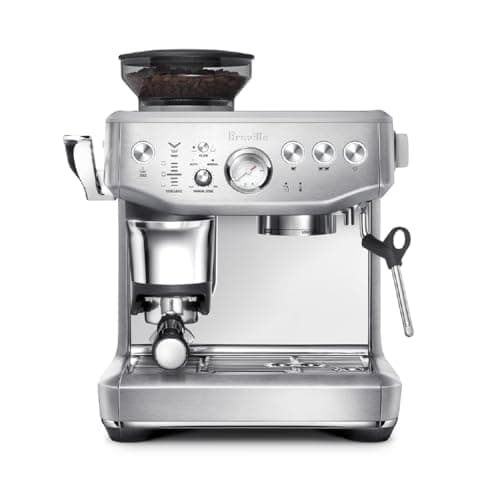
The short answer first. The best Breville Barista Express alternative for most people is the Barista Express Impress, because it keeps everything the Express is good at and automates the one step beginners get wrong — dosing and tamping the puck. If you want the best espresso for the money rather than the fewest boxes, buy a Breville Bambino Plus and a separate grinder. If you want a machine you can still be upgrading in ten years, the Gaggia Classic Evo Pro is the only 58mm alternative here. And the budget pick is the Casabrews 3700, which is explicitly not an equivalent machine — it is the cheapest honest way to find out whether you enjoy this before spending Breville money.
Every price comes from the live price layer with the as-of date under the table, which matters more than usual on this page: the Barista Express has moved a long way inside its bracket over the past year, so an alternative that was obviously cheaper six months ago may not be today. Check both numbers before you decide.
What the Barista Express is known for
It is worth being precise about this, because the Barista Express earned its reputation and the alternatives below are measured against it rather than sold over it.
The BES870XL put an integrated stainless conical burr grinder with 16 settings and dose control, a ThermoCoil boiler with PID temperature controlholding around 200°F, a 15 bar pump delivering about 9 bar at the puck, low-pressure pre-infusion, a real 54mm stainless portafilter and a manual steam wand into one machine at a price nothing else matched for years. The Razor dose-trimming tool in the box solved the single hardest problem a new owner has, which is knowing whether the dose in the basket is right. That combination is why it became the default first espresso machine, why it has an enormous owner community, and why the 54mm accessory ecosystem around it is the deepest in home espresso. Our full Barista Express review covers all of it.
| Grinder | Integrated stainless conical burr - 16 settings, dose control |
|---|---|
| Portafilter | 54mm stainless (single and dual wall baskets) |
| Boiler | ThermoCoil with PID temperature control (~200 F / 93 C) |
| Pump | 15 bar Italian pump (about 9 bar at the puck) |
| Milk | Manual steam wand |
| Water tank | 67 oz / 2 L, removable |
| In the box | Razor dose trimming tool, dosing funnel, integrated tamper, milk jug, cleaning kit, water filter |
Why people look elsewhere
Almost every search for an alternative comes down to one of five specific things, and knowing which one is yours makes this page short.
1. The tamping.You dose and tamp the puck by hand, and an uneven tamp is the most common cause of a sour, channeled shot. That is a learnable skill, but not everyone wants to learn it — which is exactly what the Impress exists for.
2. The built-in grinder. It is good, not class-leading, and it is welded to the machine: you cannot upgrade it on its own, and if it fails the machine goes with it. The money inside it would buy a better standalone grinder.
3. The wait.The ThermoCoil boiler needs real warm-up time, and you brew then steam rather than doing both at once. Breville's own ThermoJet machines heat in seconds.
4. The footprint. It wants genuine counter space and it is heavy. In a small kitchen that alone rules it out.
5. The platform.54mm is a large, well-supported ecosystem, but it is Breville's ecosystem. 58mm is the commercial standard, and if you expect to be buying baskets, bottomless portafilters and puck screens for a decade that difference matters — our portafilter size guide explains why.
How we picked
Each machine below has a live retail listing we can price, and is assessed against its published specifications — portafilter size and standard, heating system and temperature control, pump pressure at the puck, grinder type and setting count, milk system, and what ships in the box. Our full approach is on the methodology page; we do not run a test lab and we say so.
The selection rule for this page is narrower than for a normal roundup: a machine earns a place only if it fixes one of the five things abovewhile staying in the same broad category of purchase. That is why there is no $2,000 dual boiler here — "spend four times as much" is not an alternative, it is a different question, and best espresso machines under $1,500 is the page for it.
At a glance
The seven, and the thing each one fixes. Tap any button for the live Amazon price; the number shown at checkout is the one that applies.
| Machine | What it fixes | Grinder | Portafilter | Price |
|---|---|---|---|---|
| Breville Barista Express Impress | Dosing and tamping by hand | Built in, 25 settings | 54mm | $794.99Buy |
| Breville Barista Pro | Warm-up time, grinder resolution | Built in, 30 settings | 54mm | $564.95Buy |
| Breville Bambino Plus | Locked-in grinder, footprint, milk | None - buy separately | 54mm | $499.95Buy |
| Gaggia Classic Evo Pro | 54mm platform, repairability | None - buy separately | 58mm | $501.89Buy |
| De'Longhi La Specialista Arte Evo | Steam wand quality, cold brew | Built in, 15 settings | 51mm | $449.95Buy |
| Ninja Luxe Cafe Premier | Espresso only, dosing by eye | Built in, 25 settings + scale | Proprietary baskets | $599.00Buy |
| Casabrews 3700 | Price | None - buy separately | 51mm | $93.49Buy |
Prices shown are from Amazon as of November 19, 2026 and change often — the button always goes to the current listing. Some links may earn us a commission at no extra cost to you.
Best overall alternative: Breville Barista Express Impress
Fixes: dosing and tamping by hand.
The Impress is the Barista Express with the puck prep taken over by the machine. The Impress Puck Systemdoses, then tamps with a consistent lever action and tells you whether the dose was right — so the step that produces most beginner channeling becomes repeatable instead of a skill. Underneath it keeps the things that made the Express work: a 54mm portafilter, a Thermocoil boiler with PID holding around 200°F, a 15 bar pump at about 9 bar extraction, and a grinder with 25 settings rather than 16, which is finer resolution where it matters.
The honest cons.It costs meaningfully more than the Express, and what you are buying is consistency rather than a better shot ceiling — a practiced hand with a good tamper gets there on the cheaper machine. It is still a single ThermoCoil, so you brew and then steam, and it still warms up rather than heating instantly. The assisted tamper adds parts and a routine to keep clean. And it is physically no smaller than the Express. Our Barista Express Impress review goes deeper, and Barista Express vs Pro vs Impress settles the three-way choice on the only specs that differ between them.
Best for a busy morning: Breville Barista Pro
Fixes: warm-up time and grinder resolution.
The Barista Pro swaps the ThermoCoil for ThermoJet heating, which is at shot temperature in about three seconds, and the grinder steps up to 30 settings on Baratza European Precision Burrs— a real specification upgrade on the one component the Express is most criticised for. The portafilter stays 54mm, the pump stays 15 bar delivering about 9 bar at the puck, and the milk wand stays manual. For a household where somebody wants espresso at 6:50 and leaves at 7:00, the heat-up difference is the whole purchase.
The honest cons.It is the most expensive machine on this page and the extra money buys speed and grinder resolution rather than a fundamentally different shot. ThermoJet heats fast but a single heater still means brew-then-steam. The grinder is still built in and still non-upgradeable. And it does not tamp for you — if hand tamping is your actual problem, the Impress is the cheaper answer. See our Breville Barista Pro review, and the best Breville espresso machine guide if the whole lineup is still a blur.
Best espresso for the money: Breville Bambino Plus + a grinder
Fixes: the locked-in grinder, the footprint, and steaming by hand.
This is the alternative we would choose with our own money, and the argument is arithmetic. The Bambino Plus has no grinder — so instead of inheriting a built-in one, you buy a standalone grinder, which is a whole product rather than a component and will out-grind any built-in in the class. What you get in the machine is ThermoJet heating at about three seconds, a 54mm portafilter, 15 bar with low-pressure pre-infusion, a three-way solenoid valve that drops a drier puck, a 64 oz tank, and an automatic steam wand with three temperatures and three textures that still keeps a full manual mode. It is also dramatically smaller on the counter.
The honest cons.Two boxes and two decisions when you wanted one. Buying machine plus grinder separately is not automatically cheaper than the Express — check both live prices, because that comparison has changed. The automatic wand gives up the moment-to-moment control a practiced hand keeps, and the single thermocoil still means brew then steam. Detail in our Bambino Plus review, and Barista Express vs Bambino is the head-to-head for exactly this decision.
Best long-term platform: Gaggia Classic Evo Pro
Fixes: the 54mm platform, and the fact that the Express is a product rather than a platform.
The Classic Evo Pro answers the one thing no Breville can: it uses a 58mm commercial portafilter, so every cafe-standard basket, tamper, bottomless portafilter and puck screen on the market fits. The body is largely stainless, the controls are rocker switches, the heating element is around 1425 W into a single aluminum boiler, and the redesigned commercial-style steam wand steams properly for the class. The deeper point is repairability: parts supply is excellent, the owner community is enormous, and people routinely fit PID and pressure-reduction kits and keep these running for many years.
| Portafilter | 58mm (commercial standard) |
|---|---|
| Boiler | Single aluminum boiler |
| Heating element | ~1425 W |
| Pump | 15 bar vibratory pump (commonly modded toward 9 bar) |
| Milk | Manual steam wand, commercial-style |
| Build | Largely stainless steel; repairable and moddable |
| Heat-up | ~5-10 minutes to temperature |
The honest cons.It is the least convenient machine here. No grinder, no PID from the factory, five to ten minutes of warm-up, brew-then-steam, and a thermostat that will drift until you add the PID yourself. It asks for more technique and more patience than the Express, not less — this is an alternative for people who want to go deeper, not for people who want it to be easier. Our Gaggia Classic Pro review is honest about the whole picture.
Best non-Breville all-in-one: De'Longhi La Specialista Arte Evo
Fixes: steam wand quality on an all-in-one, and the absence of a cold drink option.
If what you want is the Barista Express formula from a different manufacturer, this is the closest thing. A conical burr grinder with 15 settings doses straight into a 51mm basket, Active Temperature Control gives three selectable infusion temperatures, and a 15 bar pump settles to about 9 bar during extraction. Two specifics genuinely differentiate it: the commercial-style manual steam wand is a real wand rather than an aerating panarello, and Cold Extraction Technologyruns a cold brew cycle in under five minutes — something no Breville in this class does at all. It ships with a tamper, dosing funnel, tamping mat, milk jug and both filters.
The honest cons.You still tamp by hand, so it does not fix the Express's most-cited problem. Fifteen grind steps is fewer than the Express's 16 and far fewer than the Pro's 30, and it is stepped, so some bags will sit between clicks. 51mm is the narrowest accessory platform of the three sizes on this page — a real step down from 54mm, let alone 58mm. And the built-in grinder remains a single point of failure. The whole range is decoded in our best De'Longhi espresso machine guide, and Breville vs De'Longhi takes the two brands head to head.
Best for more than espresso: Ninja Luxe Cafe Premier
Fixes: the fact that the Express makes espresso and nothing else, and dosing by eye.
The Luxe Cafe Premier is a 3-in-1 doing espresso, drip coffee and cold brew, with a built-in conical burr grinder offering 25 settings, an integrated scale that doses by weight, an assisted tamper, three brew temperatures for dark through light roasts, and a Dual Froth System that textures dairy or plant milk hands-free with steamed, thin-froth, thick-froth and cold-foam programs. Weight-based dosing is the standout: it is rare at any price and it removes the most common beginner inconsistency, which is a dose nobody weighed.
The honest cons.Guided means constrained — the assist decides things a semi-auto owner decides themselves, so the ceiling is lower than the Express with good technique. It is physically the largest machine here. The baskets and tamper are proprietary, so the 54mm and 58mm aftermarket largely does not apply. And the warranty is one year limited, against longer coverage from the established espresso brands. We review it in full in our Ninja Luxe Cafe review, and Ninja Luxe Café vs Breville Barista Express is the direct head-to-head.
Budget pick: Casabrews 3700
Fixes: price, and nothing else. We are being explicit about that.
The 3700 is on this page because "cheaper alternative" is one of the most common things people search for next to the Barista Express, and the honest answer deserves to be here rather than hidden. It is a stainless-bodied machine with a steam wand and a pressure gauge that pulls real espresso from ground coffee for a small fraction of Breville money. What it is not is an equivalent: there is no grinder, no PID, and the basket is pressurized, which means it produces crema through a valve rather than through extraction.
The honest cons.A pressurized basket hides grind errors, which is convenient at first and a ceiling later — our pressurized vs non-pressurized portafilter guide explains exactly what that costs you. The bar rating on the box tells you nothing about pressure at the puck. Build quality and temperature stability are not in the same conversation as the machines above. Buy it to discover whether you enjoy the routine, with the expectation of replacing it if you do — De'Longhi Stilosa vs CASABREWS 3700 compares it with the other cheap machine worth considering, and the best espresso machines under $200 covers the whole bracket.
When to buy the Breville anyway
A page of alternatives owes you the opposite case too. Buy the Barista Express rather than anything above if you want one box and one purchase and the idea of choosing a grinder separately is the part putting you off. Buy it if you want the deepest accessory ecosystem in home espresso— 54mm Breville parts, precision baskets, bottomless portafilters and puck screens are stocked everywhere, and the owner community means every problem you have has been solved publicly already. And buy it if PID temperature control at this price matters to you, because the Gaggia does not have it from the factory and the cheap machines do not have it at all.
The honest summary is that the Barista Express is not a machine with a flaw to escape. It is a machine with a specific set of trade-offs, and each alternative above trades differently. If none of the five reasons in the section above describes your situation, you are looking at the right machine already — and the best espresso machines under $700 shows where it now sits against the rest of its bracket on live prices.
The bottom line
Hate tamping? Barista Express Impress. Short on time in the morning? Barista Pro. Want the best cup for the money and happy to own two appliances? Bambino Plus plus a real grinder. Want 58mm and a machine you can repair forever? Gaggia Classic Evo Pro. Want an all-in-one from someone other than Breville, with a better steam wand and a cold brew cycle? De'Longhi La Specialista Arte Evo. Want filter coffee and cold brew from the same machine? Ninja Luxe Cafe Premier. Just want to find out whether you like making espresso? Casabrews 3700.
Whatever you choose, keep money back for a grinder and fresh beans. The Barista Express exists because it bundles the grinder; every alternative here that does not bundle one is only a bargain if you actually buy the grinder too.
Frequently asked questions
What is the best alternative to the Breville Barista Express?
The Breville Barista Express Impress, for most people. It keeps the same 54mm portafilter, PID-controlled Thermocoil boiler and 15 bar pump, upgrades the grinder from 16 to 25 settings, and adds the Impress Puck System to dose and tamp for you - which removes the step that causes most beginner channeling. If your objection is the built-in grinder rather than the tamping, a Bambino Plus plus a standalone espresso grinder makes better espresso for similar money.
Is there a cheaper alternative to the Breville Barista Express?
Yes, but with a real trade-off. The Casabrews 3700 pulls espresso and steams milk for a small fraction of the price, and the De'Longhi La Specialista Arte Evo offers a built-in grinder for less than some Breville models. Neither is an equivalent machine: the Casabrews uses a pressurized basket and has no PID or grinder, and the Arte Evo uses a narrower 51mm platform. Check both live prices before assuming the gap is as wide as it used to be.
Should I buy a Barista Express or a Bambino Plus and a separate grinder?
Buy the Barista Express if you want one box, one purchase and one footprint. Buy the Bambino Plus and a grinder if you want the best espresso for the money, because a standalone grinder is a complete product rather than a component sized to fit inside a machine, and it can be upgraded or replaced on its own. The Bambino Plus is also much smaller and its automatic steam wand textures milk without practice.
What is the main weakness of the Breville Barista Express?
There are two commonly cited ones. First, you dose and tamp the puck by hand, and an uneven tamp is the most frequent cause of a sour, channeled shot - which is the specific problem the Impress model was built to solve. Second, the built-in grinder is good rather than class-leading and cannot be upgraded independently of the machine. Neither stops it making excellent espresso; both are reasons people look at alternatives.
Is the Gaggia Classic Evo Pro better than the Barista Express?
It is better at different things. The Gaggia uses a 58mm commercial portafilter, so the entire cafe accessory market fits it, and it is built to be repaired and modified for years. The Barista Express includes a grinder and PID temperature control, heats faster, and is far more convenient day to day. Choose the Gaggia if you want a platform to grow into and will buy a separate grinder; choose the Breville if you want a complete machine out of the box.
Do Barista Express accessories fit these alternatives?
Only the 54mm ones, and only on the other 54mm machines. Breville's 54mm baskets, bottomless portafilters, tampers and puck screens fit the Barista Express, Impress, Pro and Bambino Plus. They do not fit the Gaggia Classic Evo Pro, which is 58mm, or the De'Longhi La Specialista Arte Evo, which is 51mm, and the Ninja uses proprietary baskets. Our portafilter size guide covers which number fits what.
Sources
- Breville - Barista Express (BES870XL) published specifications: integrated stainless conical burr grinder with 16 settings and dose control, 54mm portafilter, ThermoCoil with PID around 200 F / 93 C, 15 bar pump at about 9 bar at the puck, 67 oz tank, Razor dose trimming tool
- Breville - the Barista Express Impress (BES876) product page: 54mm portafilter, 25 grind settings, Impress Puck System assisted dosing and tamping, Thermocoil at 200 F with PID, 15 bar pump / 9 bar extraction
- Breville - the Barista Pro (BES878) product page: 30 grind settings, Baratza European Precision Burrs, ThermoJet heating, 15 bar Italian pump / 9 bar extraction, 54mm portafilter
- Breville - the Bambino Plus (BES500) product page and specifications: 54mm portafilter, ThermoJet heating, automatic milk texturing at 3 temperatures and 3 textures plus manual mode, three-way solenoid valve, 64 oz / 1.9 L tank
- Gaggia - Classic Evo Pro published specifications: 58mm commercial portafilter, single aluminum boiler, approximately 1425 W element, 15 bar vibratory pump, commercial-style steam wand, stainless construction
- De'Longhi - La Specialista Arte Evo (EC9250M) published specifications: 51mm filter holder, built-in conical burr grinder with 15 settings, 15 bar pump at about 9 bar extraction, Active Temperature Control with 3 infusion temperatures, commercial-style manual steam wand, Cold Extraction Technology
- Ninja - Luxe Cafe Premier (ES601) published specifications: 3-in-1 espresso, drip and cold brew, built-in conical burr grinder with 25 settings, integrated scale and assisted tamper, Dual Froth System presets, three brew temperatures, one-year limited warranty
- CASABREWS - 3700 Essential listing specifications: stainless steel body, steam wand, pressure gauge, pressurized filter basket
- Amazon listings (Creators API) - live availability, current prices and brand/model title verification for every ASIN on this page before publication
Keep reading
Buying your first setup?
See how we pick — compiled specs, cost-per-shot math, and honest trade-offs — then dig into the guides. No fake test lab, no rankings for hire.